PERSONAL
INDIVIDUAL
5 STEP DESIGN
SCHOOL
BRIEF OVERVIEW
ROLE: UX Researcher & Designer
TOOLS: Figma
PLATFORM: Mobile App (Tablet)
TIMELINE: 7 Months
PROBLEM
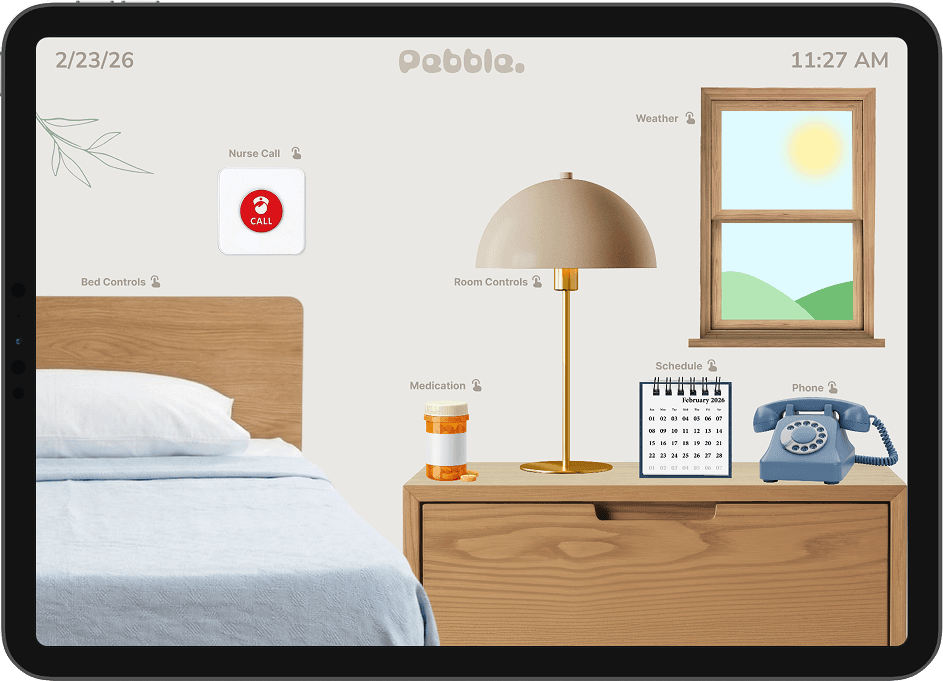
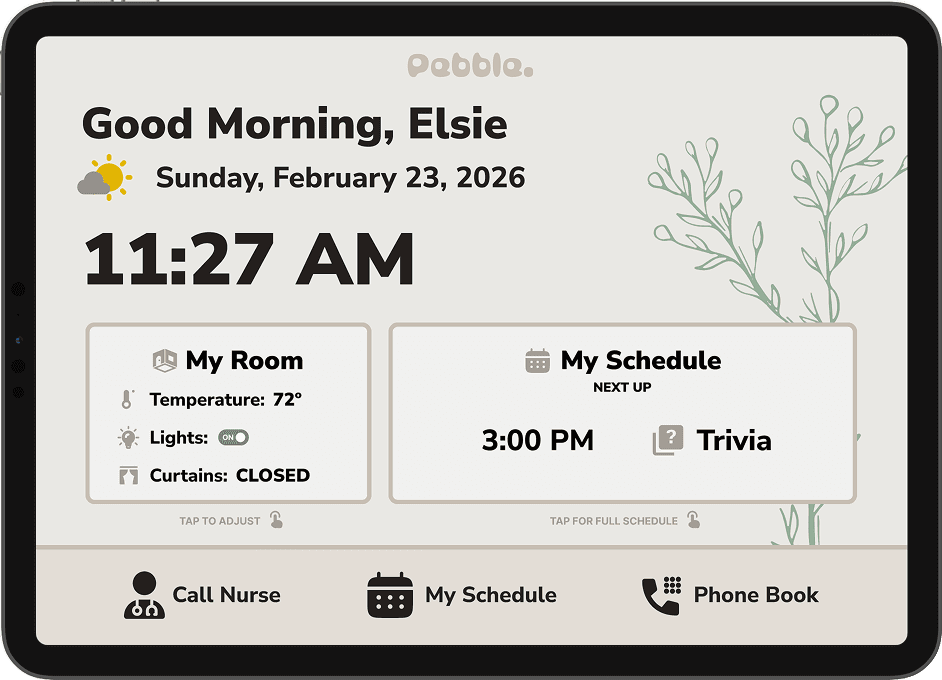
Nursing home residents — most of whom live with cognitive limitations, sensory decline, and a deep need for autonomy and connection — have no tools designed to support their daily quality of life. Every existing solution is built for short-term hospital care, and blind to the realities of long-term living.
THE PROCESS
Empathize
Define
Ideate
Prototype
Test
I conducted a literature review across eleven peer-reviewed sources, synthesizing findings on elderly technology adoption, cognitive decline, digital accessibility, and long-term care design. My goal was to move beyond assumptions and build a research-backed map of unmet needs.
70% of long-term care residents have cognitive limitations, most often dementia (Bowles et al., 2015)
Standardized technology "paradoxically contributes to a decrease in residents' independence" (Jøranson et al., 2025)
Older adults prefer technology "disguised as an everyday device" — not medical equipment (Mannheim et al., 2019)
Ten resident needs emerged from the synthesis: autonomy and independence, social connection, cognitive and memory support, safety and health monitoring, pain communication, dignity and non-stigmatizing design, privacy and control, personalized information access, accessible design for sensory decline, and human connection over mechanization.
The research also surfaced a critical principle that shaped how I scoped the interface: technology in care settings should be an additional tool for accessing human relationships, never a replacement for them. This directly informed the decision to exclude entertainment features that might substitute for social engagement — if there's a yoga class at 2pm, Pebble's job is to remind you to go, not to stream a yoga video instead.
INTERACTIVE PROTOTYPE

SUPPLEMENTAL ANALYSIS - GOOGLE STITCH AI
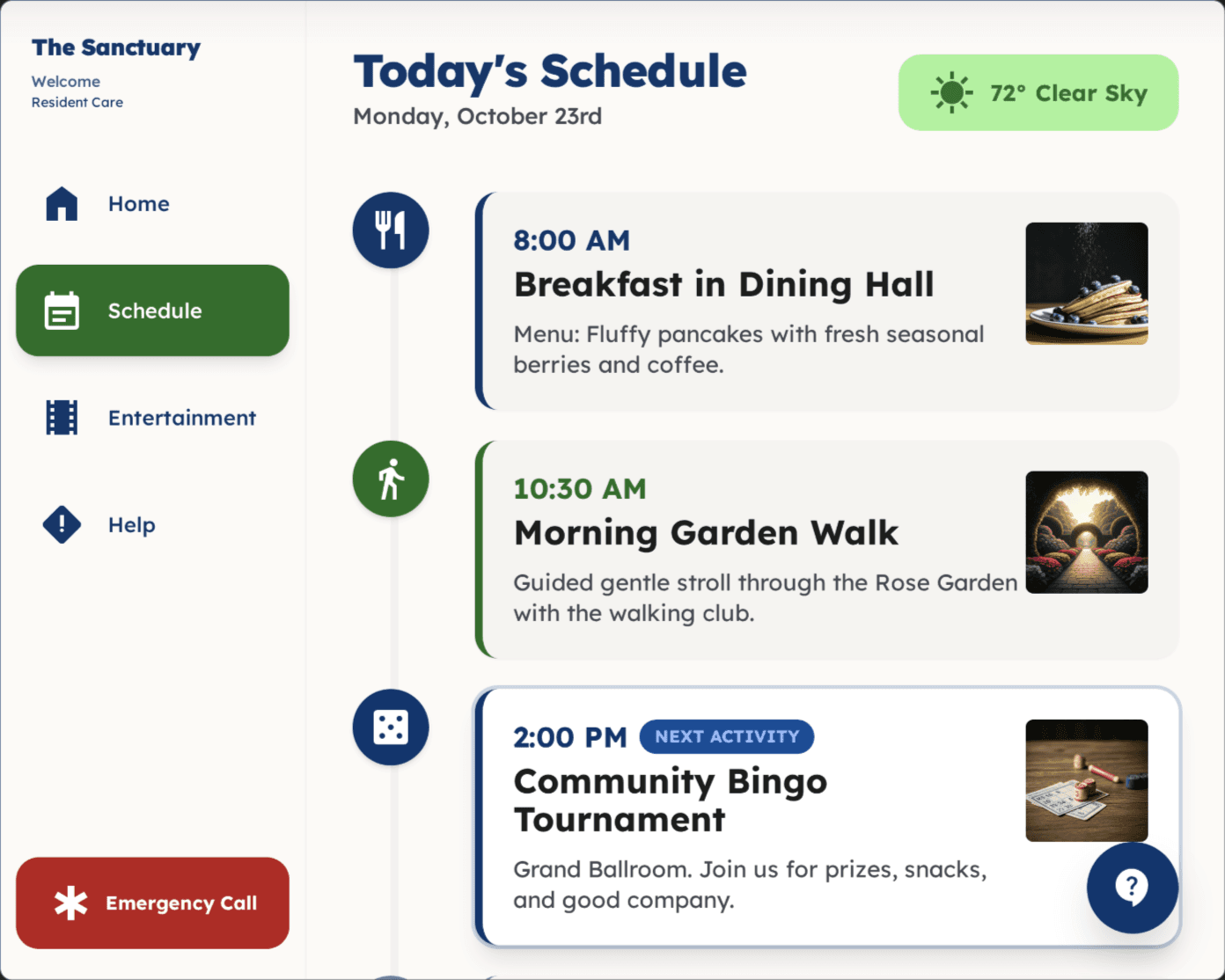
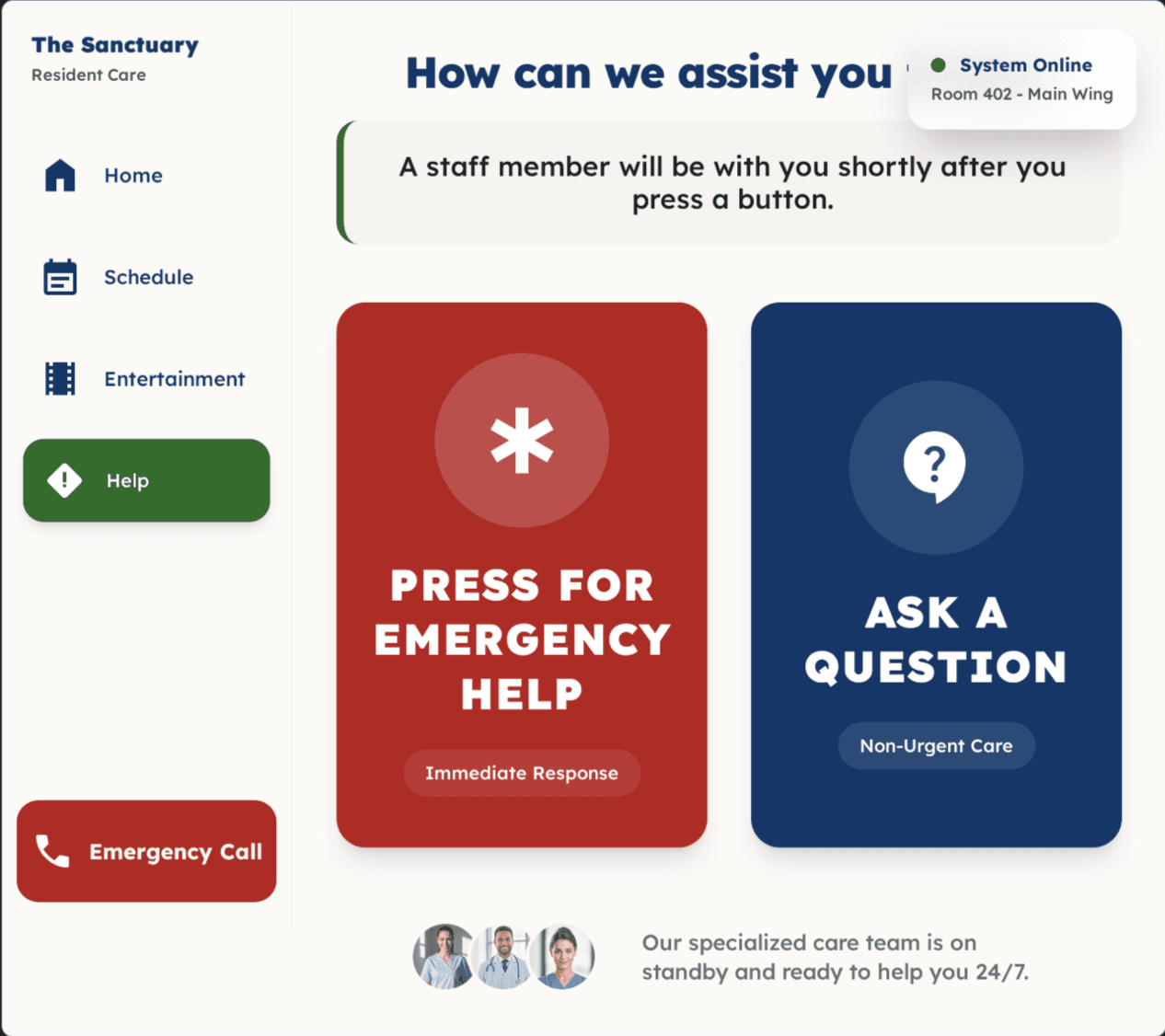
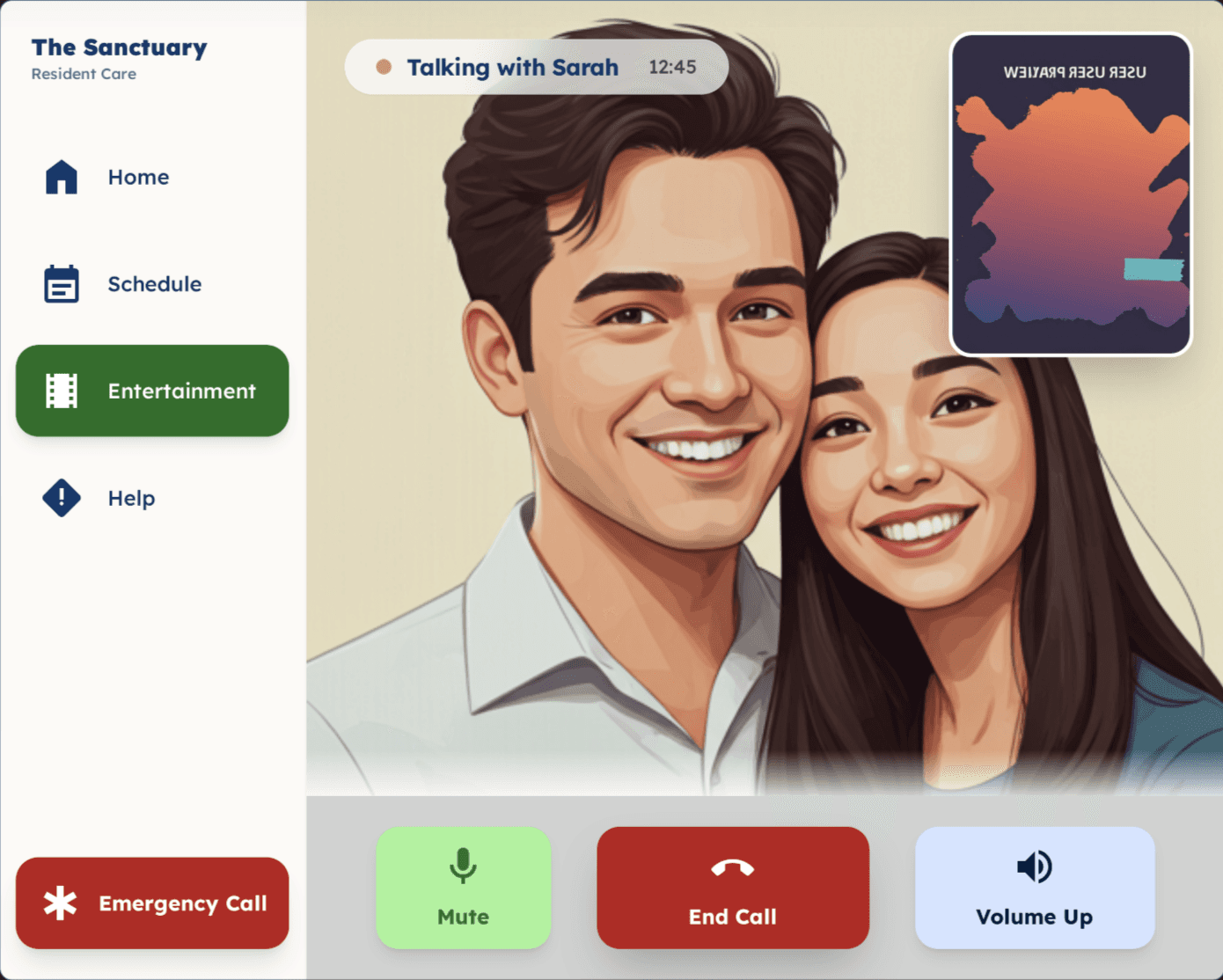
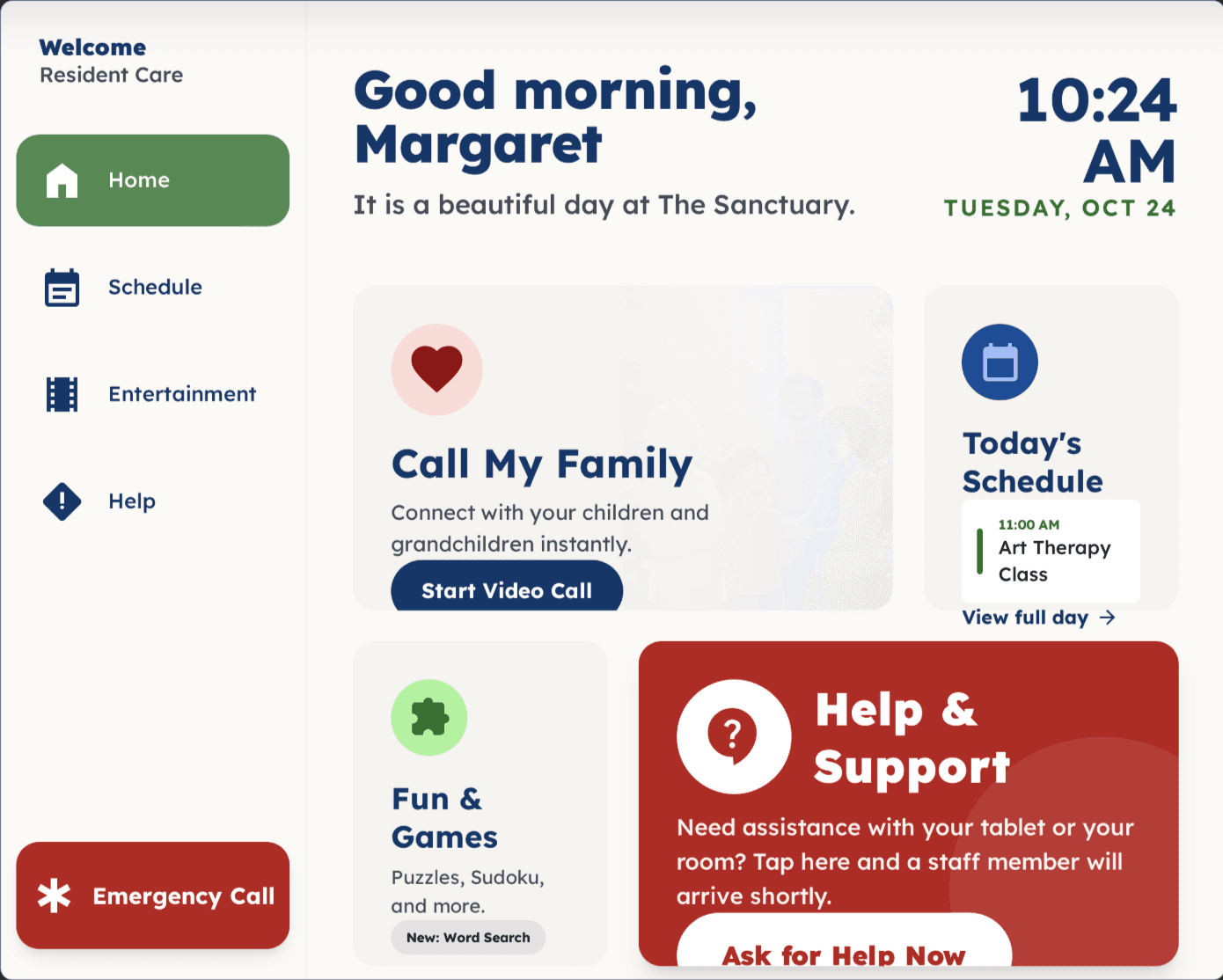
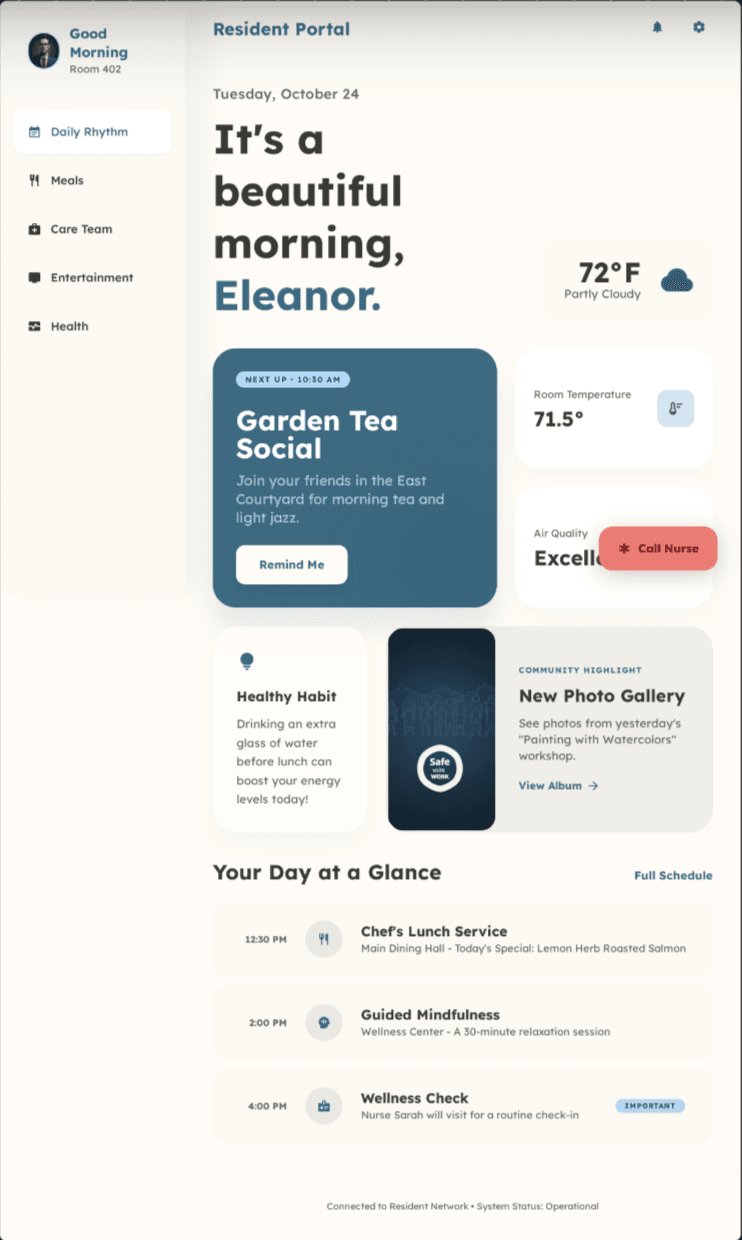
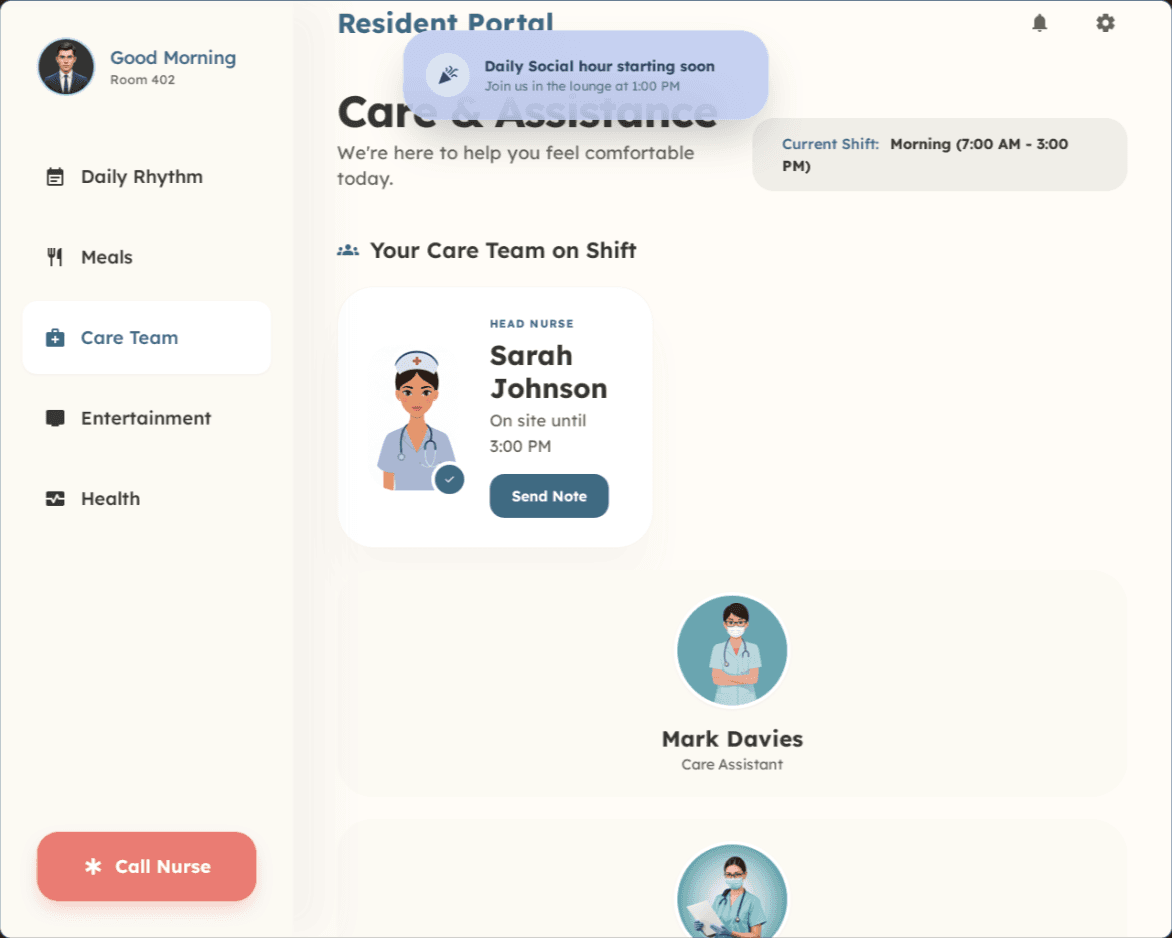
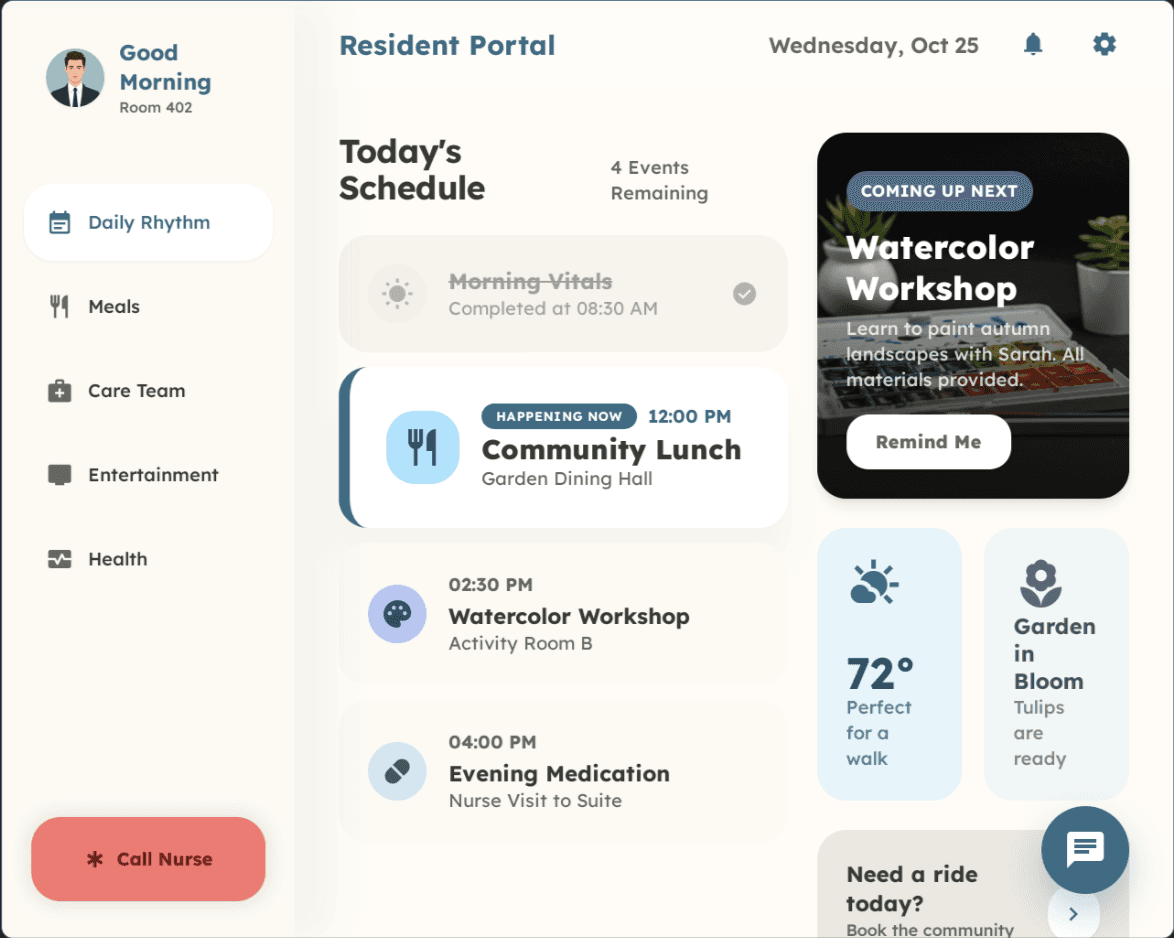
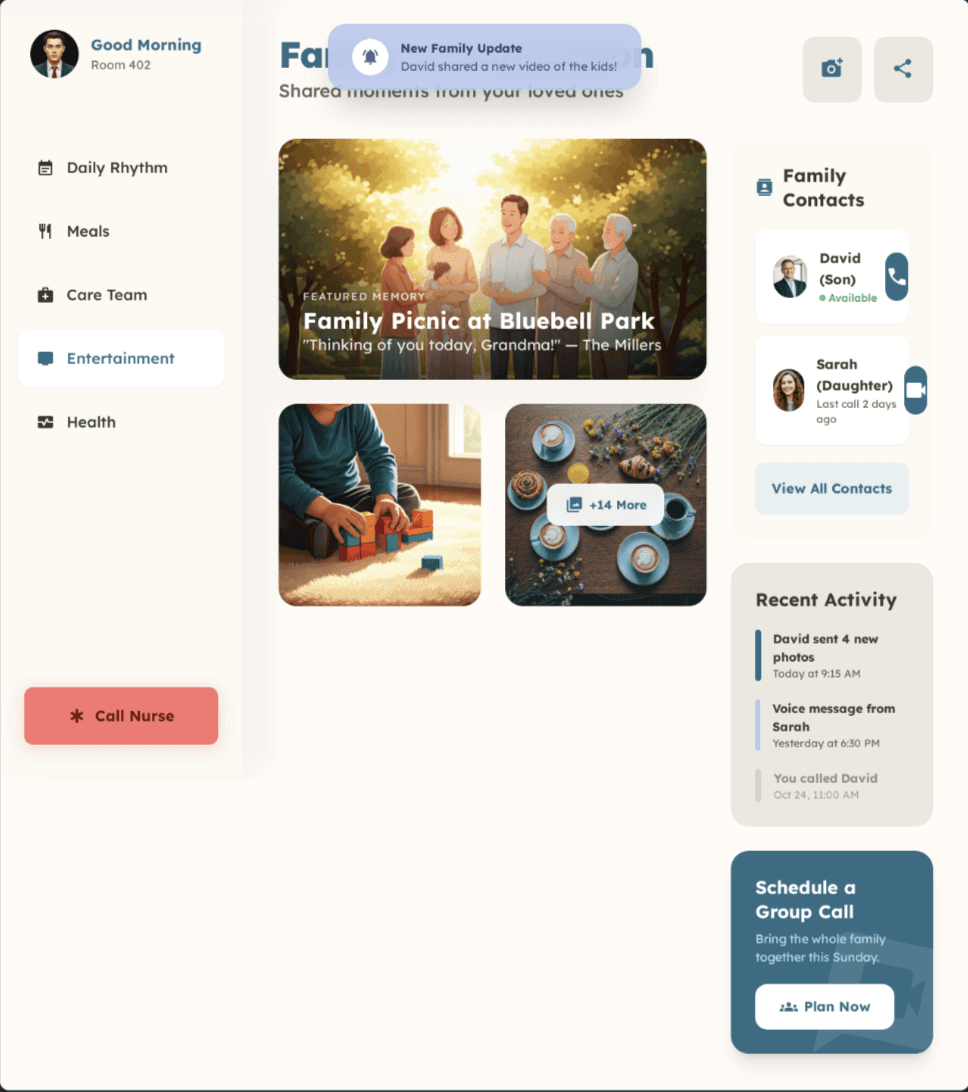
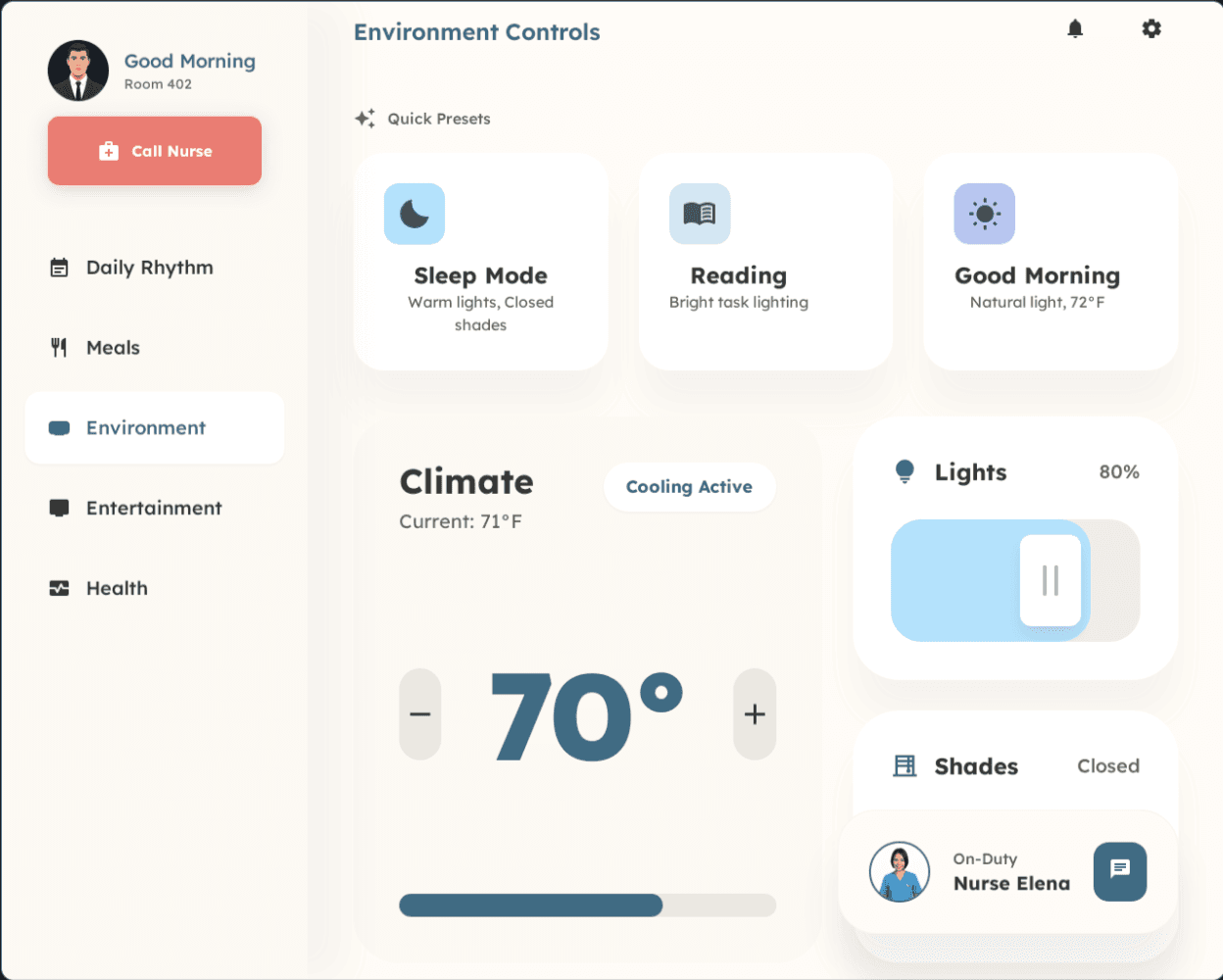
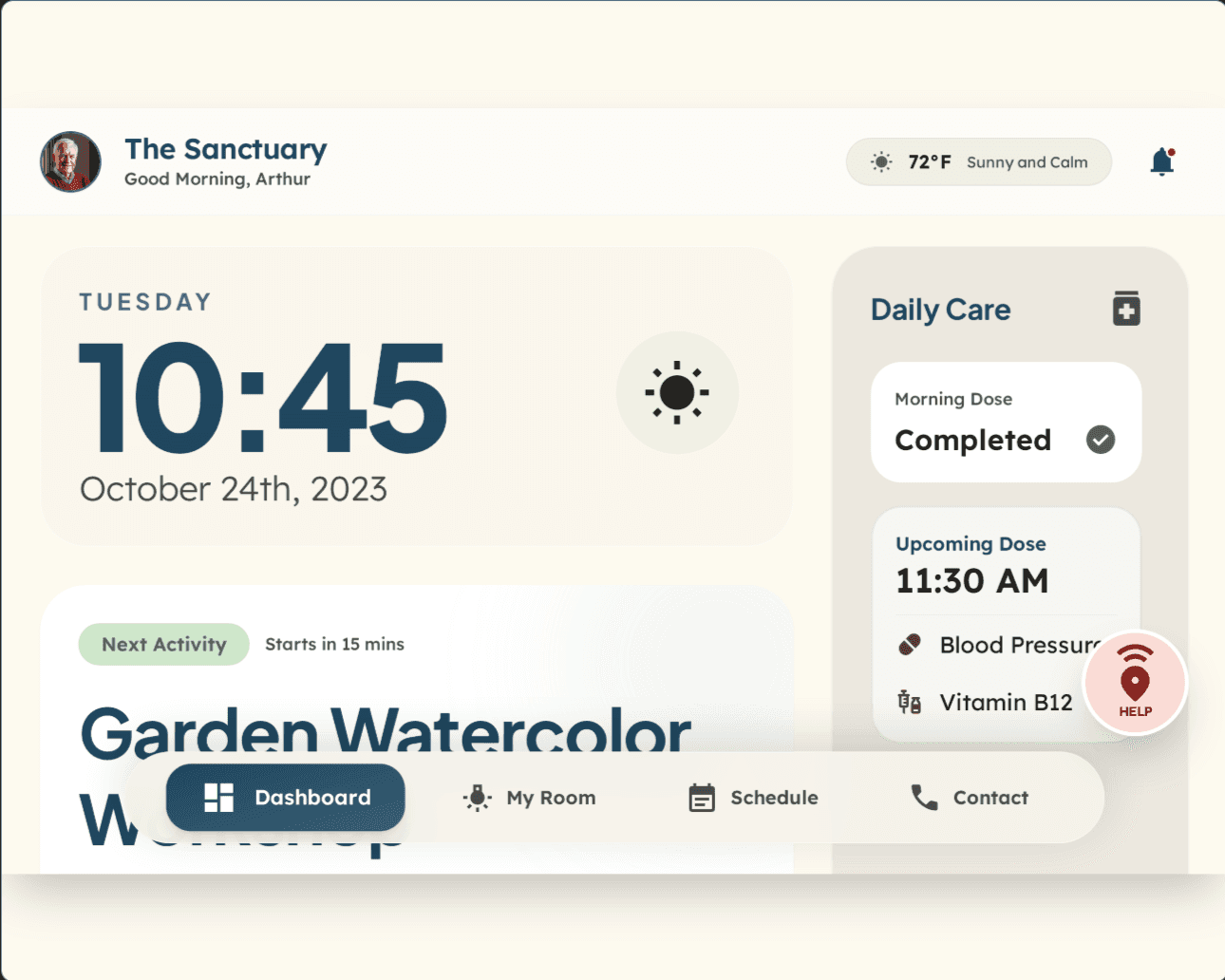
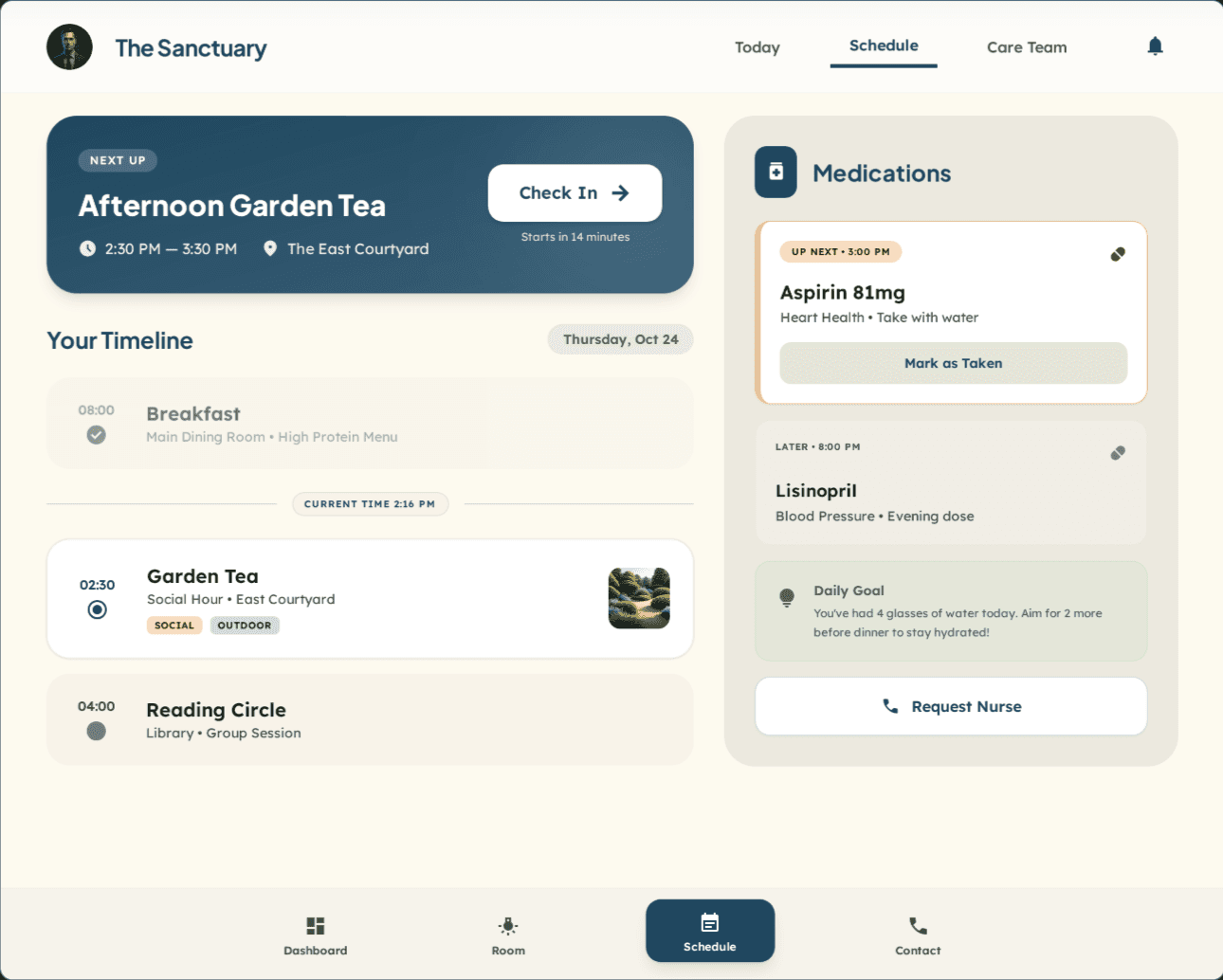
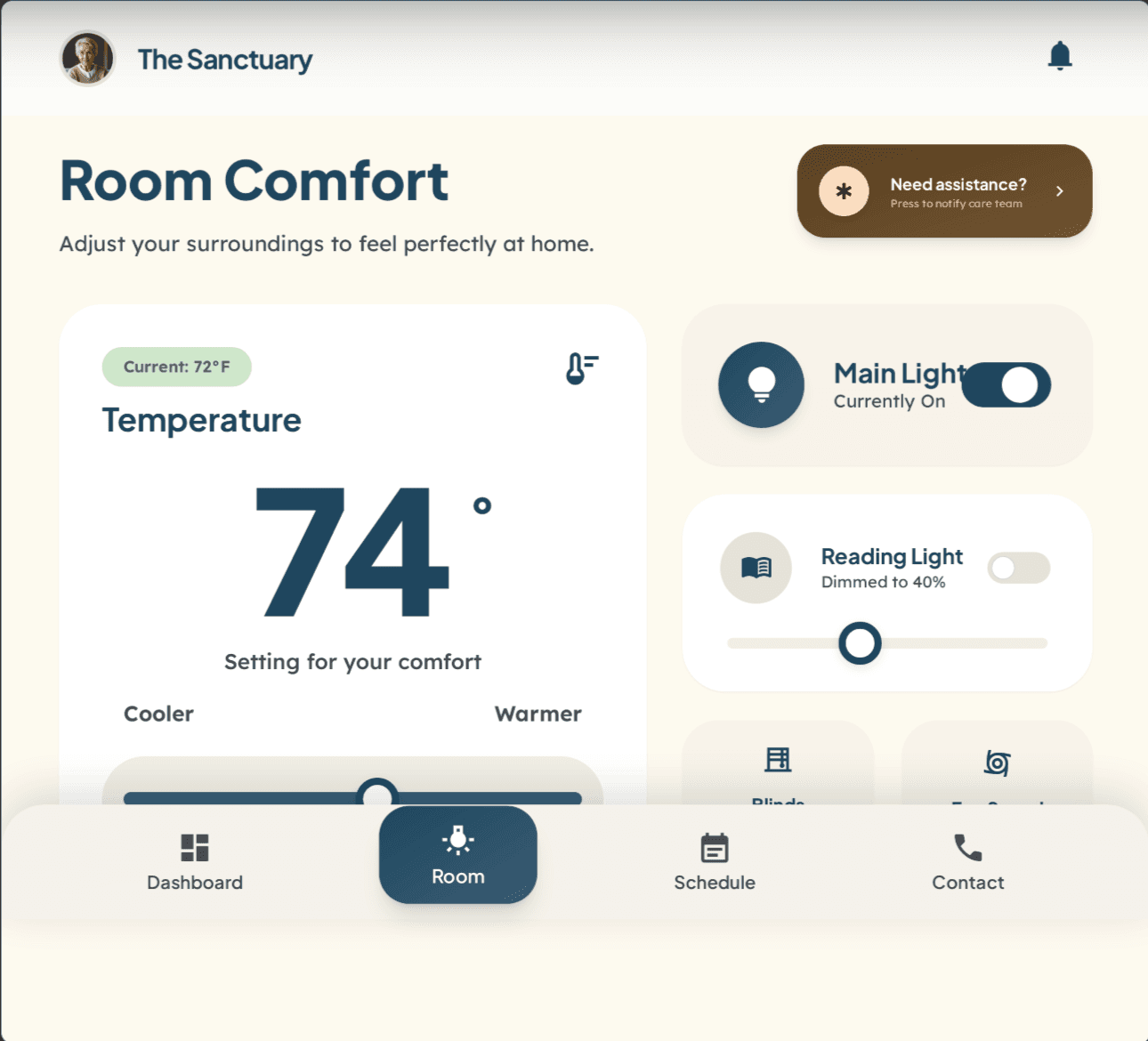
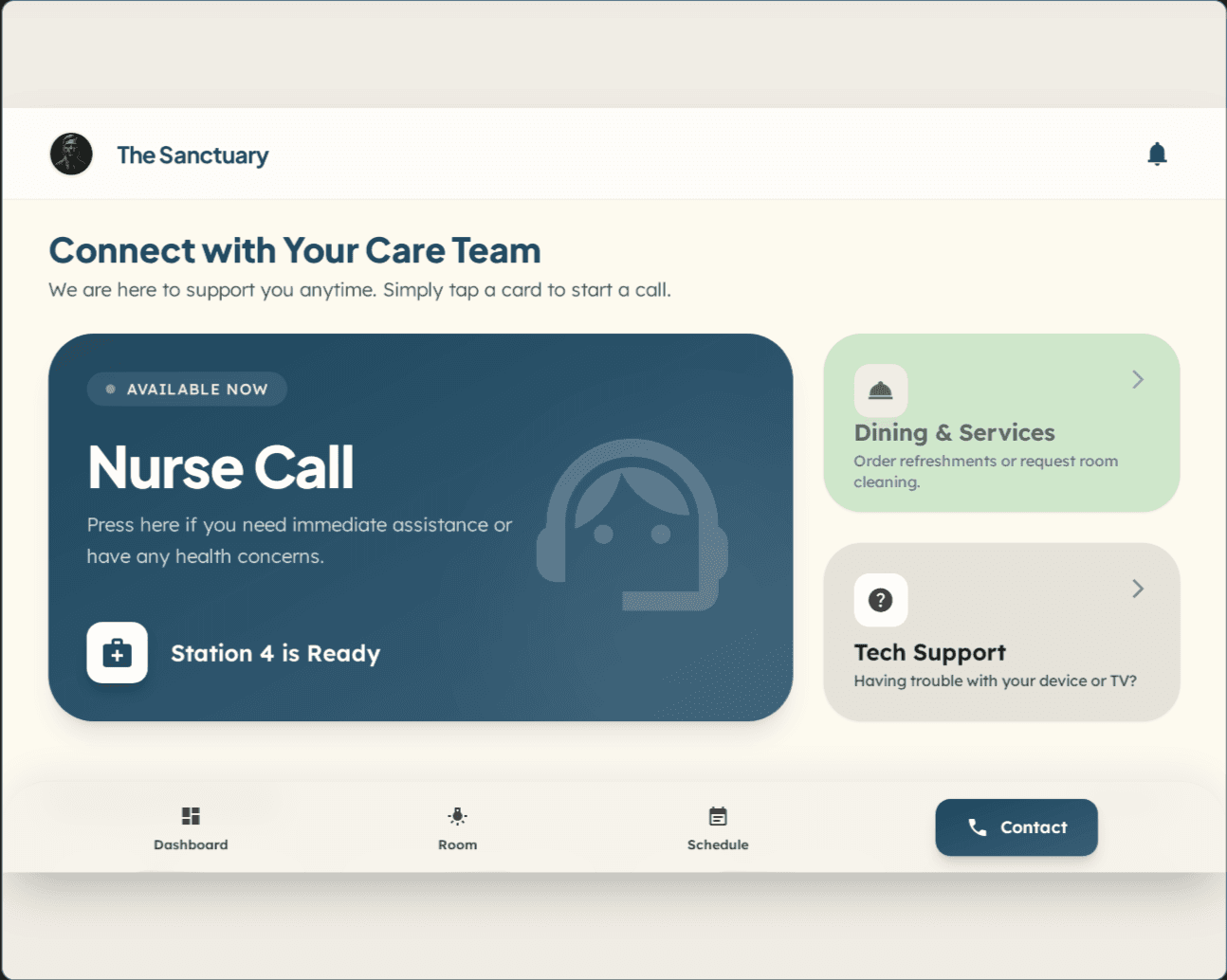
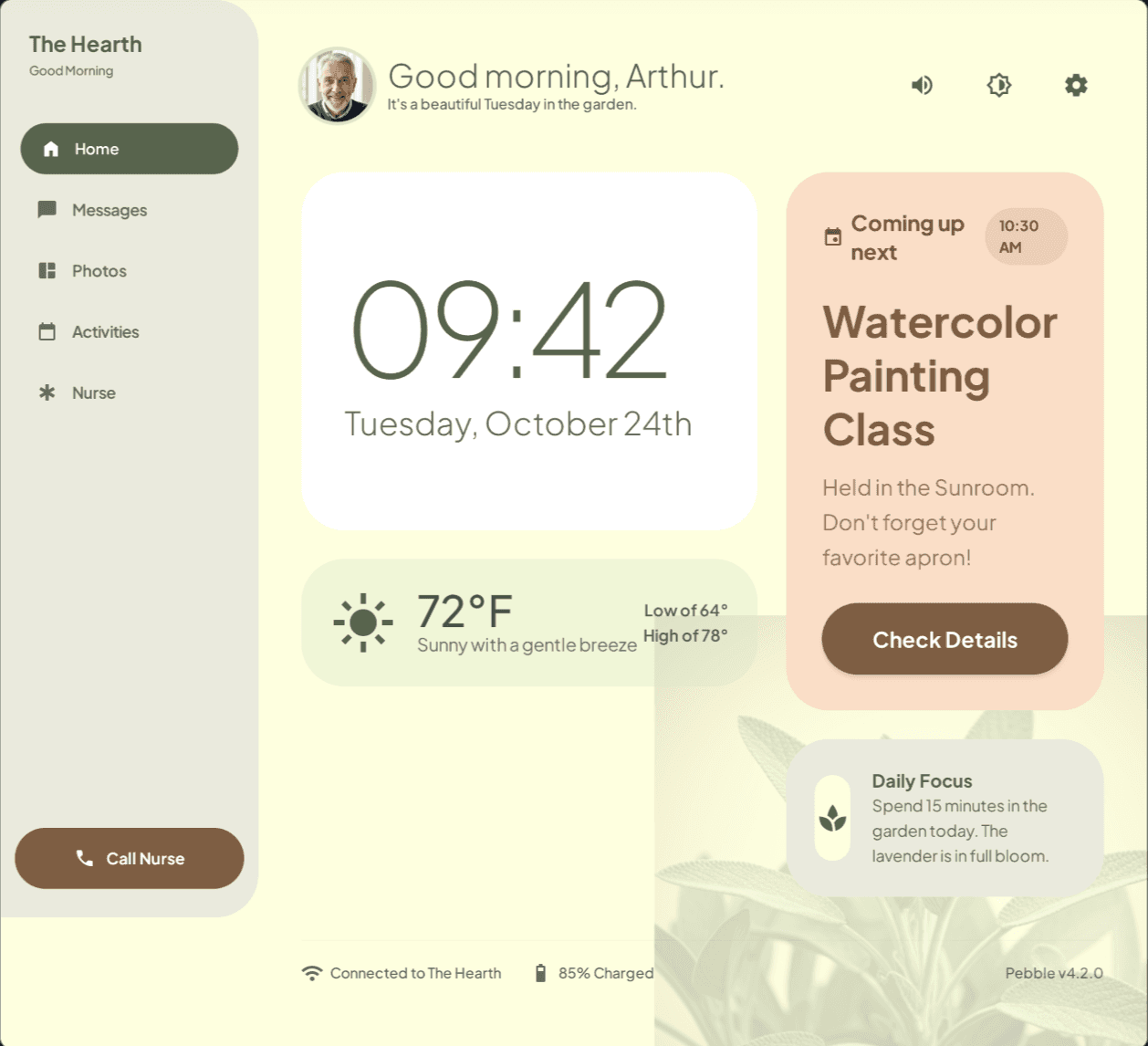
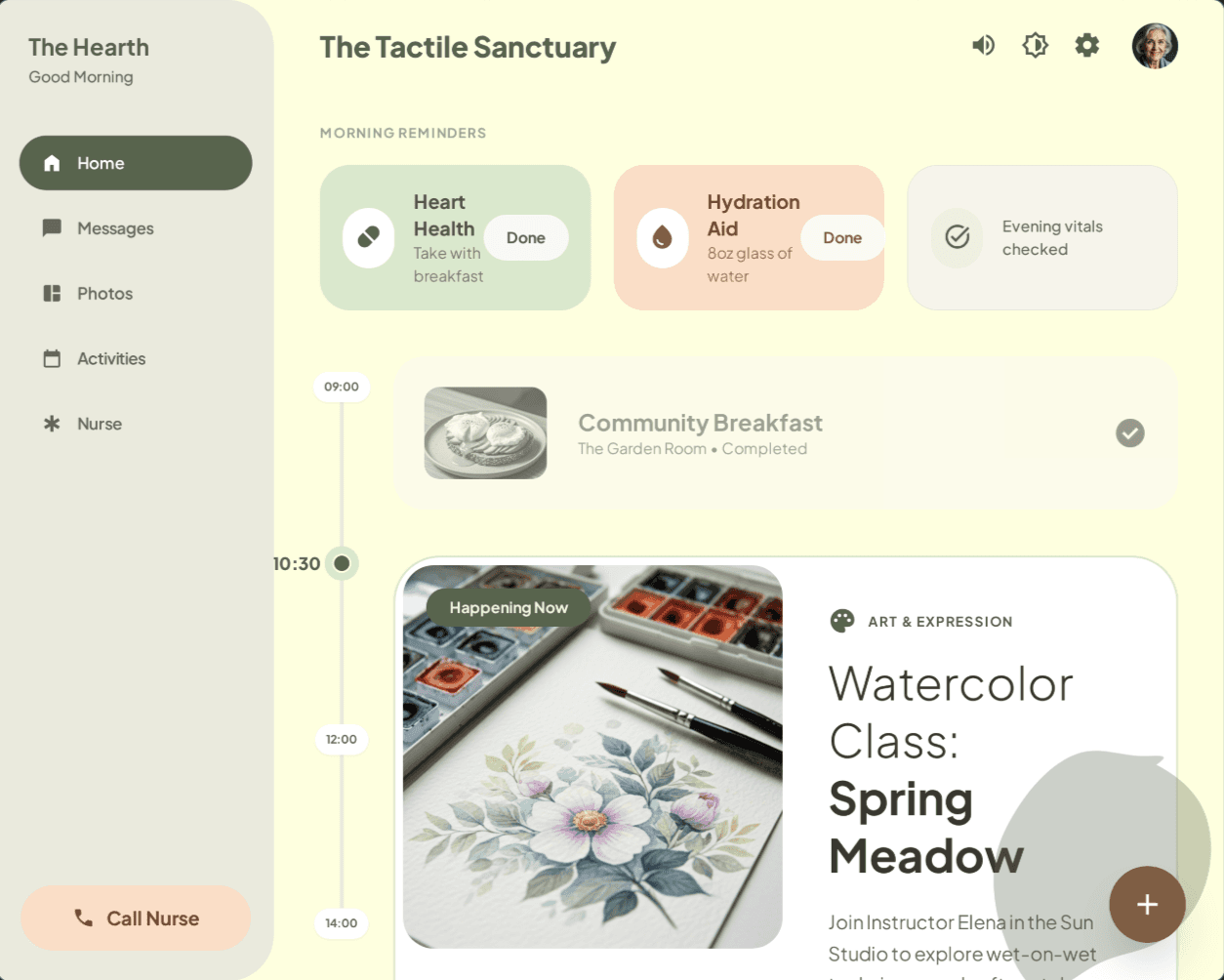
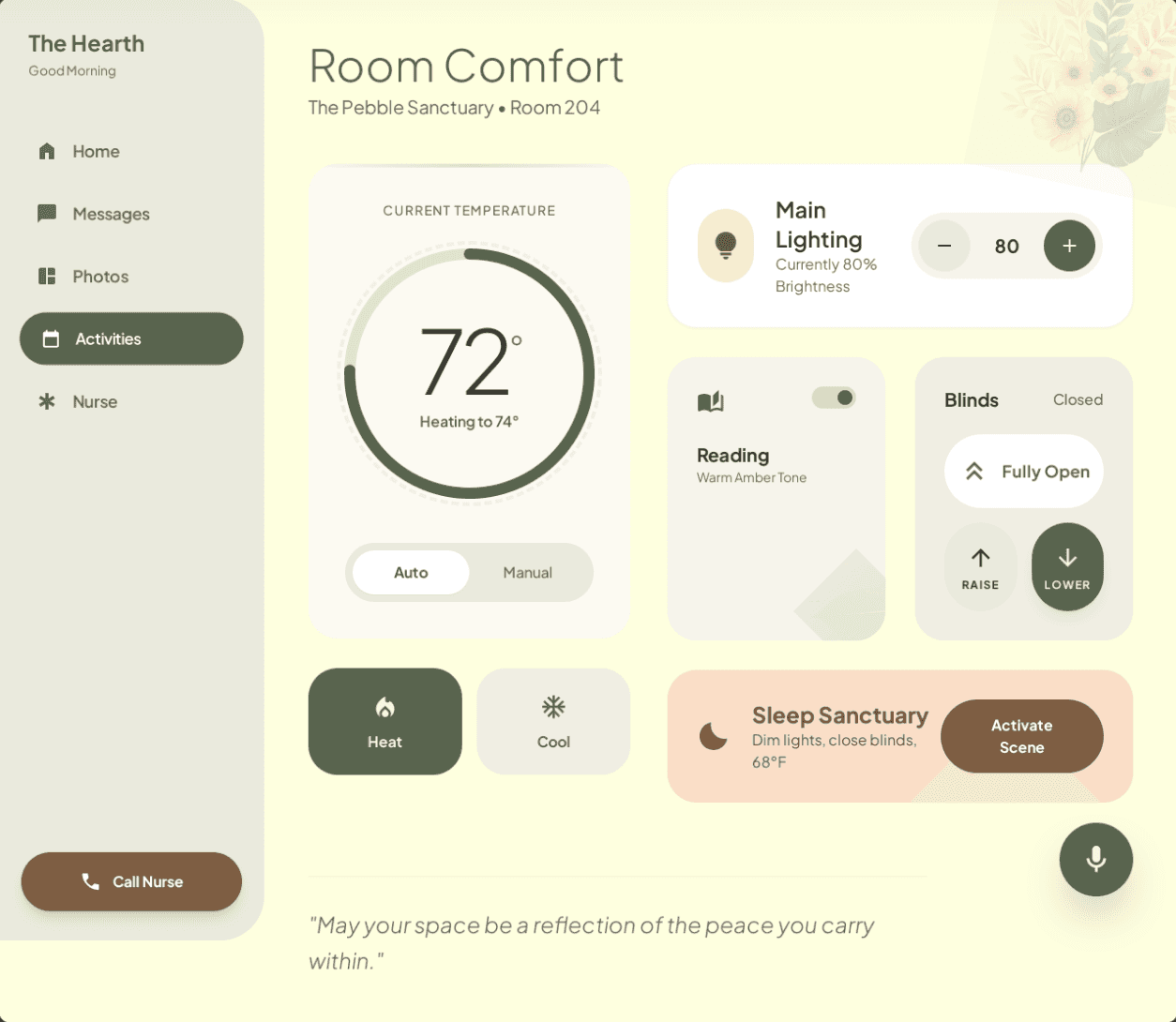
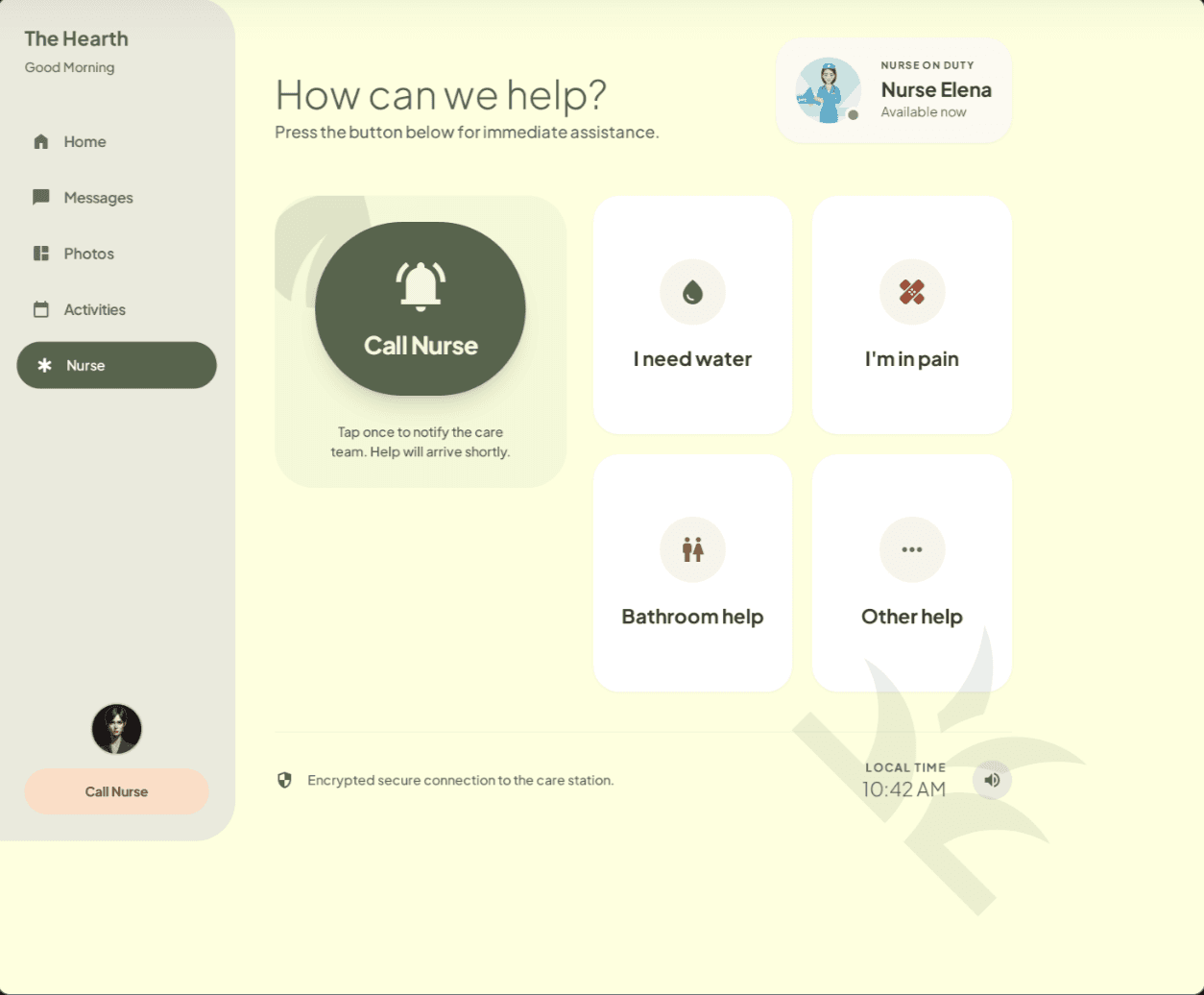
As a final experiment to close out this project, I ran an experiment using Google Stitch — an AI-powered UI generation tool — giving it four prompts of increasing specificity for the same problem. Starting from a vague one-liner and ending with a fully detailed brief that included Pebble's name, philosophy, visual direction, and target user. The goal: understand where AI-generated design falls short for a population it can't actually know, and what that reveals about the irreducible value of research-driven, human-led work.
TAKEAWAYS
Prompt depth ≠ design depth
Even a fully detailed brief produced outputs that differed more in surface aesthetics than in conceptual approach. The structural logic of all four generations was nearly identical.
AI designs for a generic user
Stitch could describe its audience in words but couldn't design for them in practice. Knowing a user profile is not the same as understanding lived experience — and that gap showed up directly in the usability of the output.
Narrow variation range
Across four prompts, the fundamental layout logic, interaction patterns, and visual language converged. AI tends toward the mean; meaningful design often requires deliberate divergence from it.
Aesthetics without empathy
Stitch could apply "warm" or "botanical" as a visual filter. It couldn't make the decision to frame privacy controls as personal preference rather than medical settings — because that required understanding dignity, not just aesthetics.
AI tools like Stitch are genuinely useful for rapid scaffolding, but this experiment reinforced something the research literature kept returning to. Designing for vulnerable populations demands embodied understanding. This understanding is a result of research, experience, and real-life interactions, something that AI has yet to replicate.