Case Study & ReDesign: Instagram's Interested/Not Interested Feature
GROUP
5 STEP DESIGN
REDESIGN
CASE STUDY
SCHOOL
BRIEF OVERVIEW
ROLE: UX Researcher & Designer
TOOLS: Figma, FigJam, Google Surveys
PLATFORM: Mobile App
TIMELINE: 2 Months
PROBLEM
Instagram users lack an effortless and transparent way to communicate content preferences to Instagram's algorithm.
Despite the existence of tools like "Interested/Not Interested," most users default to scrolling past unwanted content because accessing these features requires extra steps that feel disproportionate to the payoff. This means the algorithm is left to interpret passive behaviors — watch time, accidental likes, brief pauses — as meaningful signals, resulting in a feed that frequently misses the mark and erodes the user experience over time.
PROBLEM
Instagram users lack an effortless and transparent way to communicate content preferences to Instagram's algorithm.
Despite the existence of tools like "Interested/Not Interested," most users default to scrolling past unwanted content because accessing these features requires extra steps that feel disproportionate to the payoff. This means the algorithm is left to interpret passive behaviors — watch time, accidental likes, brief pauses — as meaningful signals, resulting in a feed that frequently misses the mark and erodes the user experience over time.
SOLUTION
SOLUTION
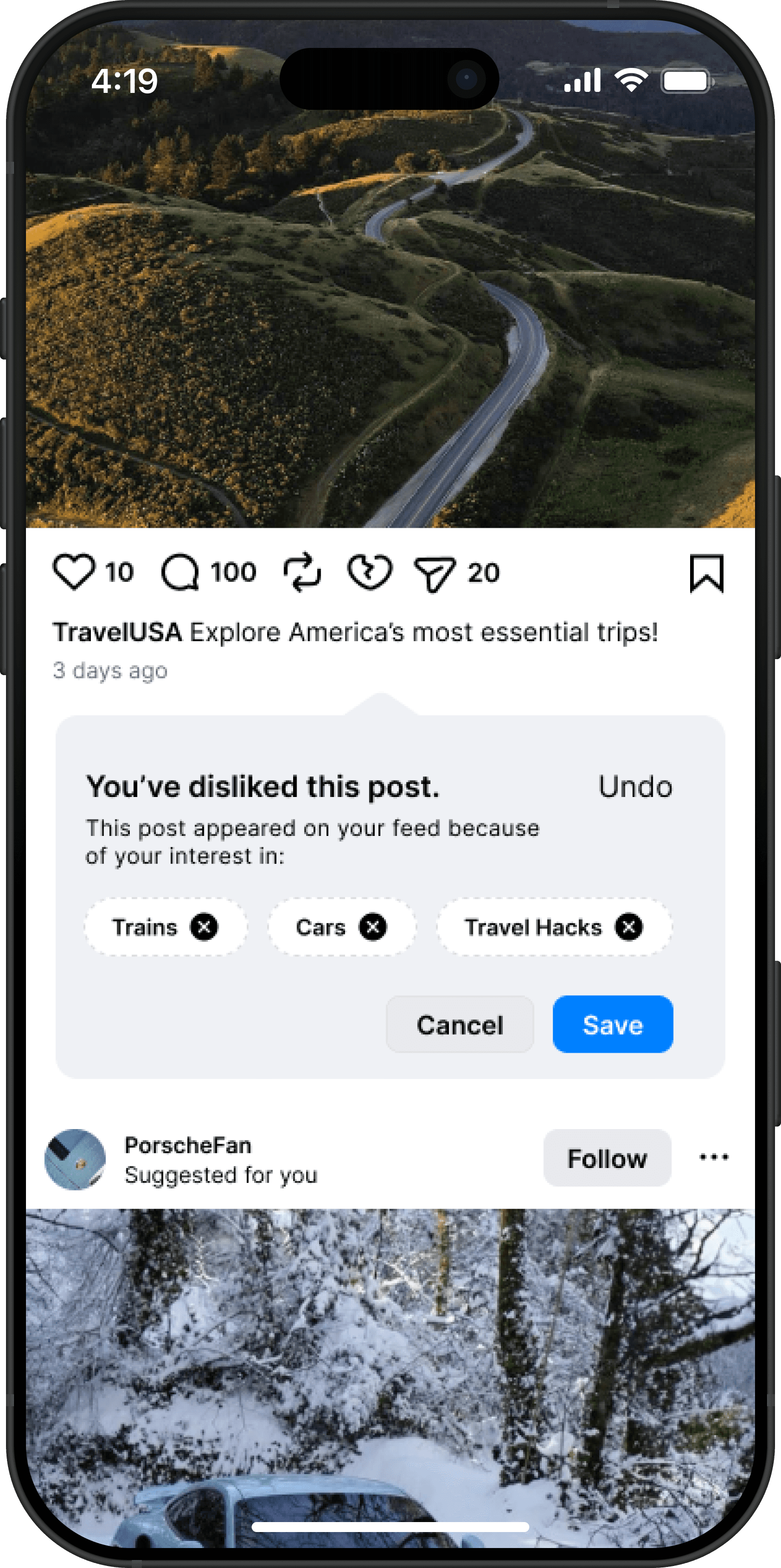
Surface feed controls inline — A small "heartbreak" icon visible directly on posts lets users signal disinterest without tapping into hidden menus
Add transparency to recommendations — Clicking the icon reveals why a post was suggested, giving users context
Enable algorithm edits on the spot — Users can remove unwanted topics from their recommendations without navigating away from the feed or disrupting their scrolling experience.
Surface feed controls inline — A small "heartbreak" icon visible directly on posts lets users signal disinterest without tapping into hidden menus
Add transparency to recommendations — Clicking the icon reveals why a post was suggested, giving users context
Enable algorithm edits on the spot — Users can remove unwanted topics from their recommendations without navigating away from the feed or disrupting their scrolling experience.
THE PROCESS
Empathize
Define
Ideate
Prototype
Test
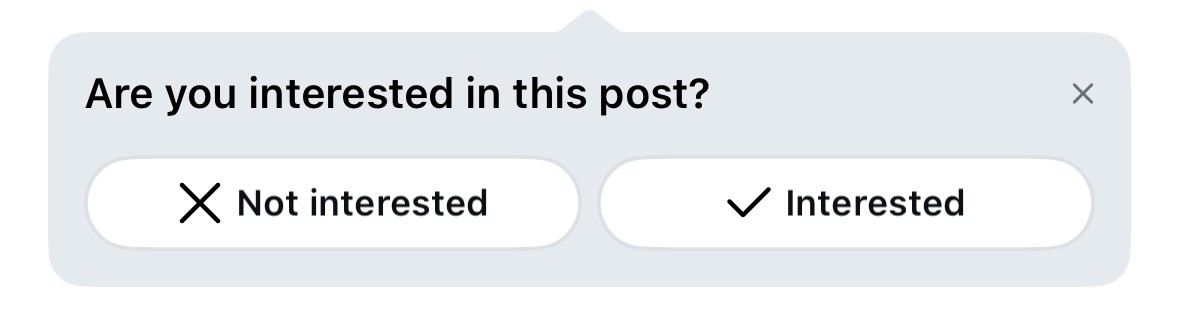
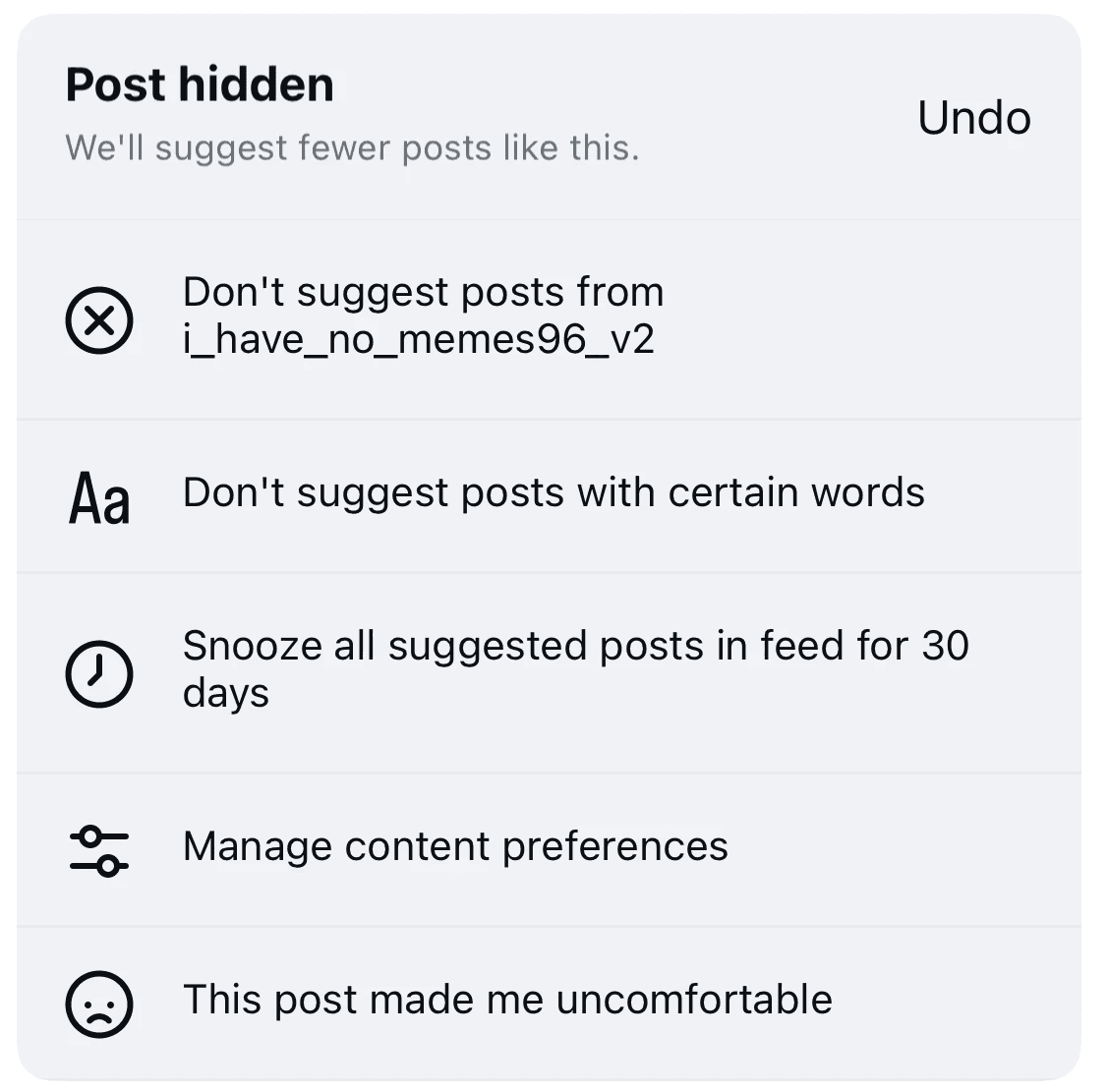
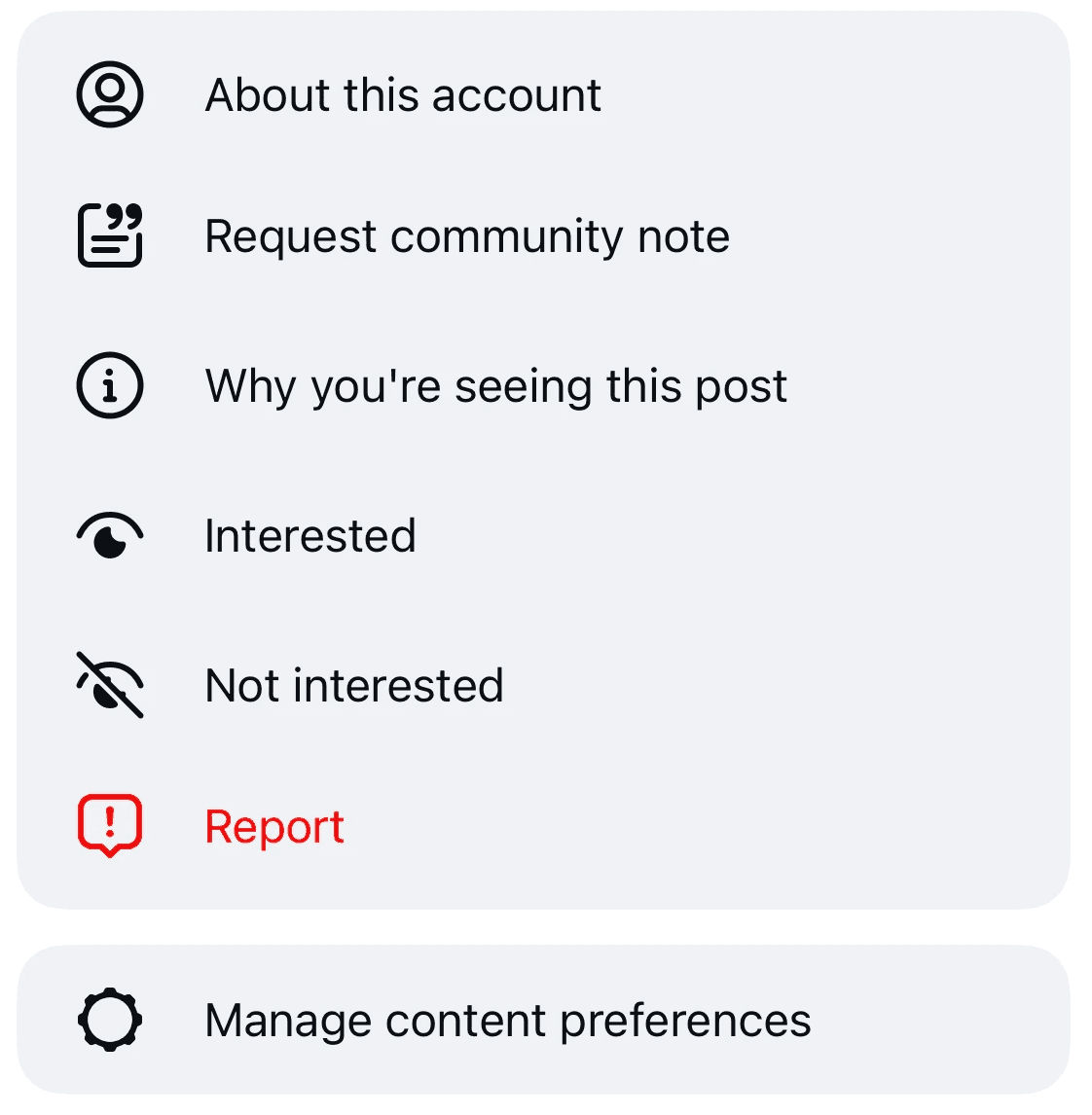
As a team, we conducted market research to figure out the history of the interested/not interested functionality. When was it implemented, and why? As a user, how easy is it to access the feature?
Here's what we found:
The feature evolved from a simple post-hiding tool into a sophisticated feed-tuning mechanism, designed primarily for heavy, algorithm-dependent users who want personalization without social consequences. We concluded that Instagram's core tension — balancing user preferences with ad-driven engagement goals — is what makes this feature strategically necessary, even if it remains underutilized by the average user.
Empathize
Define
Ideate
Prototype
Test
As a team, we conducted market research to figure out the history of the interested/not interested functionality. When was it implemented, and why? As a user, how easy is it to access the feature?
Here's what we found:
The feature evolved from a simple post-hiding tool into a sophisticated feed-tuning mechanism, designed primarily for heavy, algorithm-dependent users who want personalization without social consequences. We concluded that Instagram's core tension — balancing user preferences with ad-driven engagement goals — is what makes this feature strategically necessary, even if it remains underutilized by the average user.