INDIVIDUAL
CASE STUDY
SCHOOL
BRIEF OVERVIEW
ROLE: UX Researcher
TOOLS: Microsoft PowerPoint
PLATFORM: Mobile App
TIMELINE: 1 Week
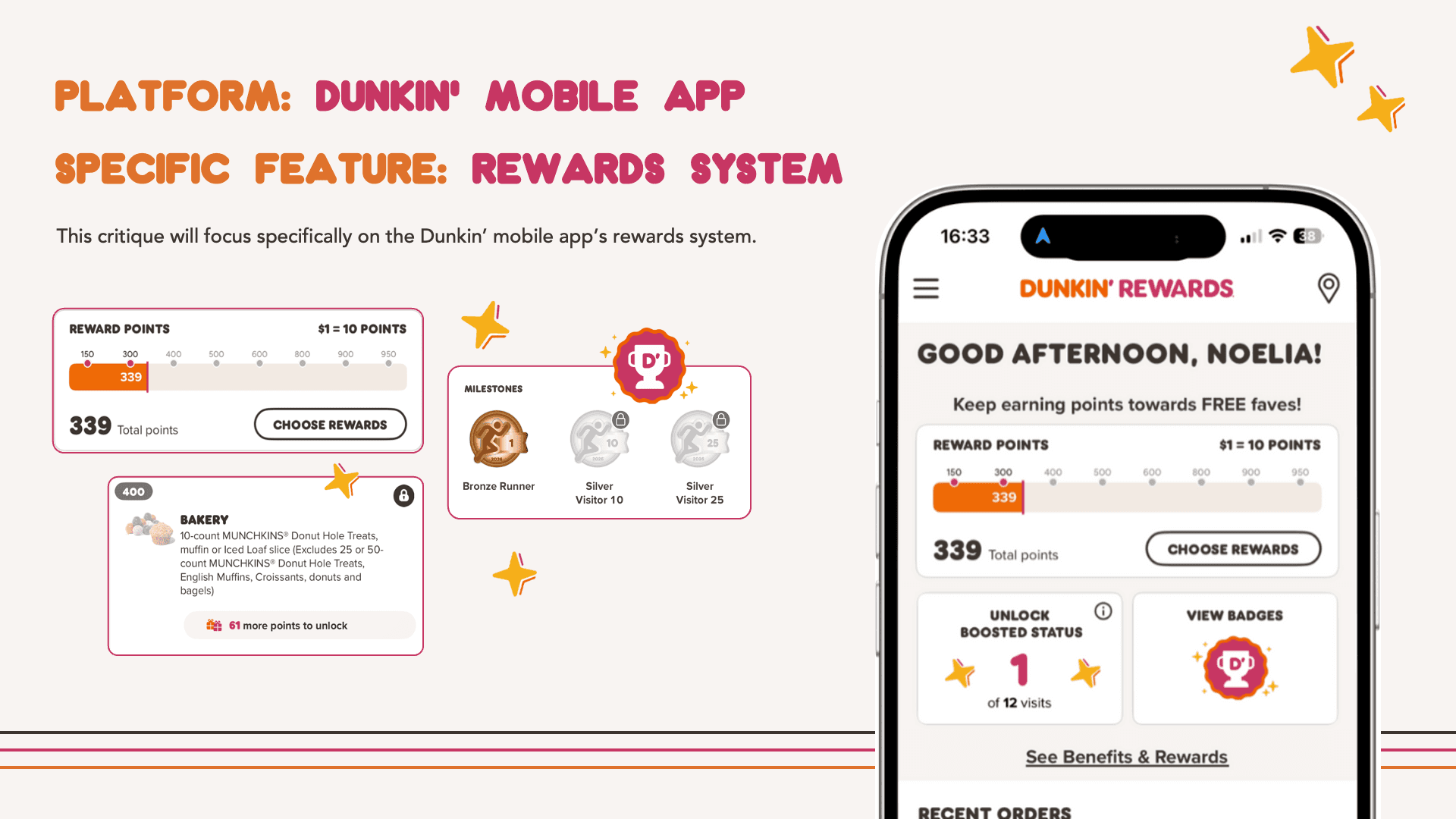
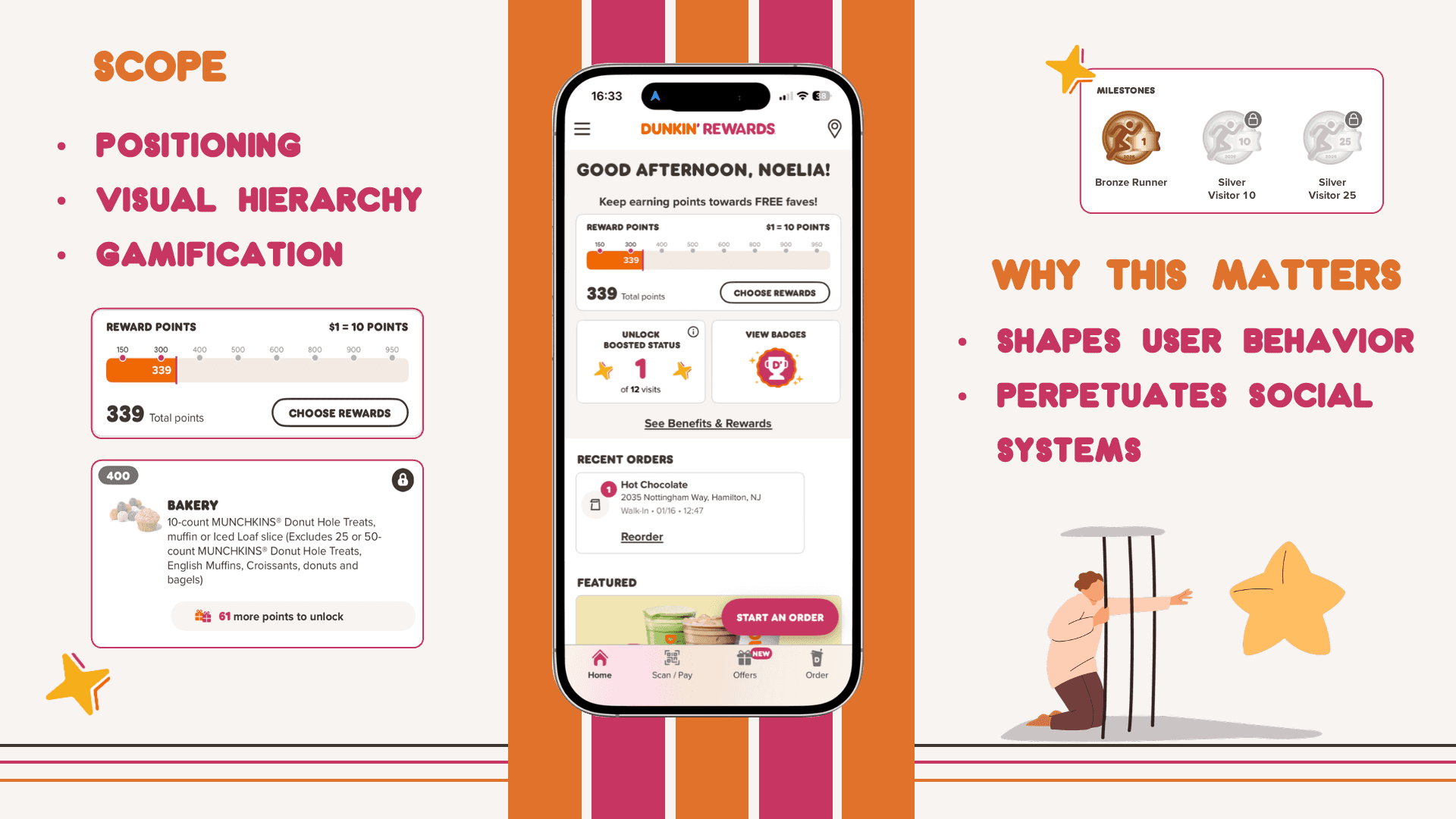
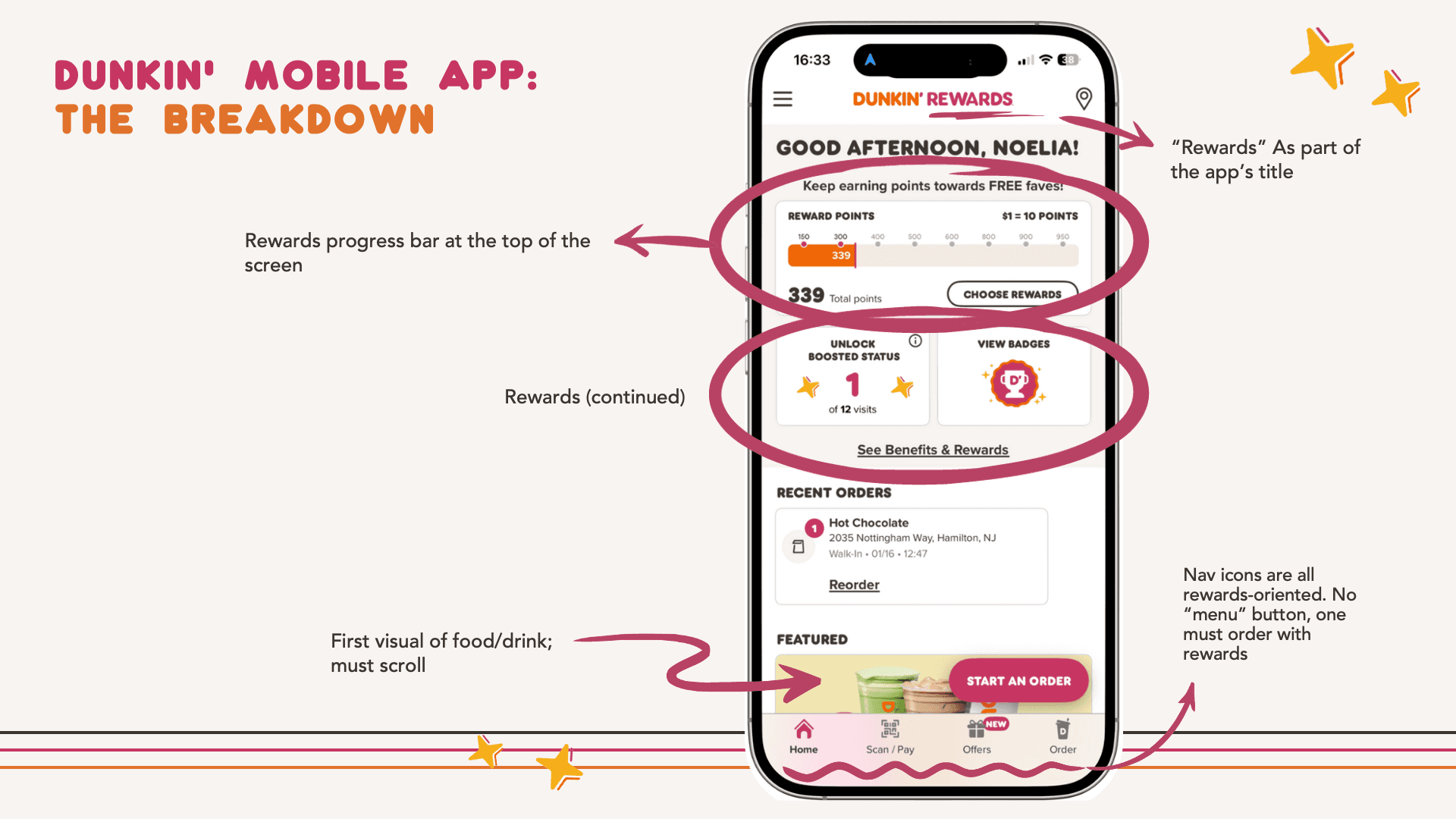
For this design critique, my research will focus specifically on the Dunkin mobile app's reward system. I’ll be looking at how the interface design, visual hierarchy, and gamification strategies influence user behavior and shape how people interact with the app.
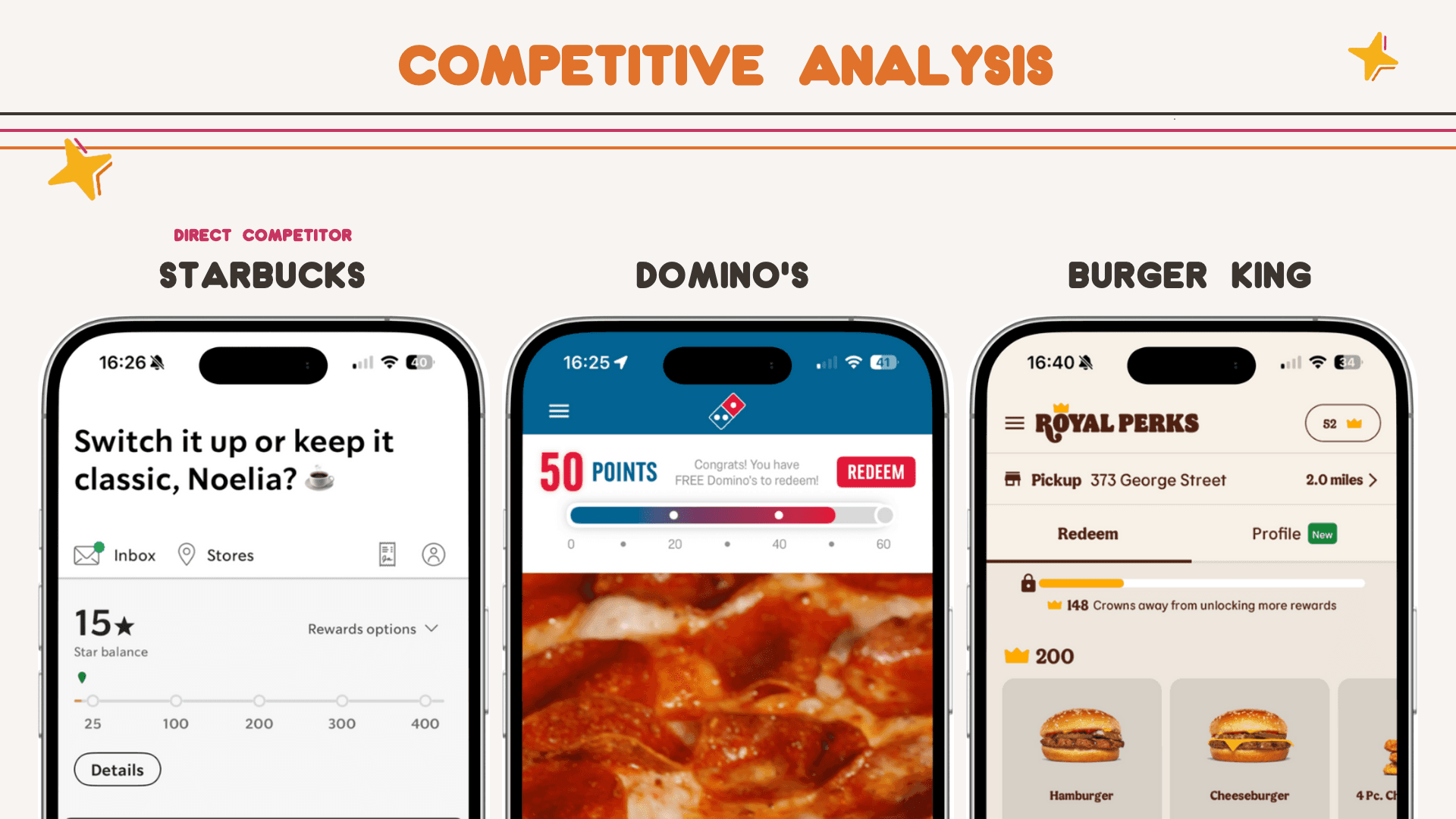
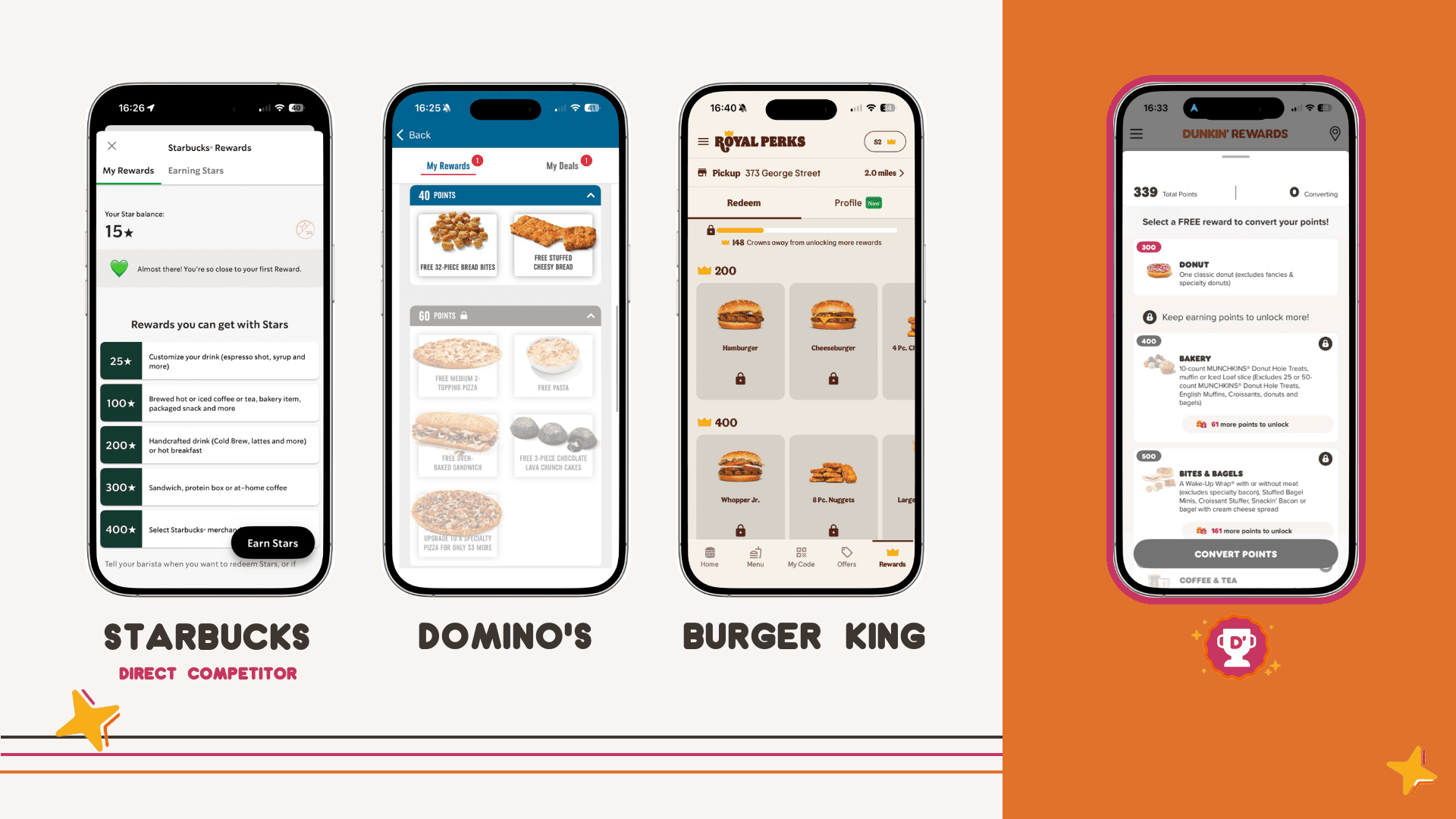
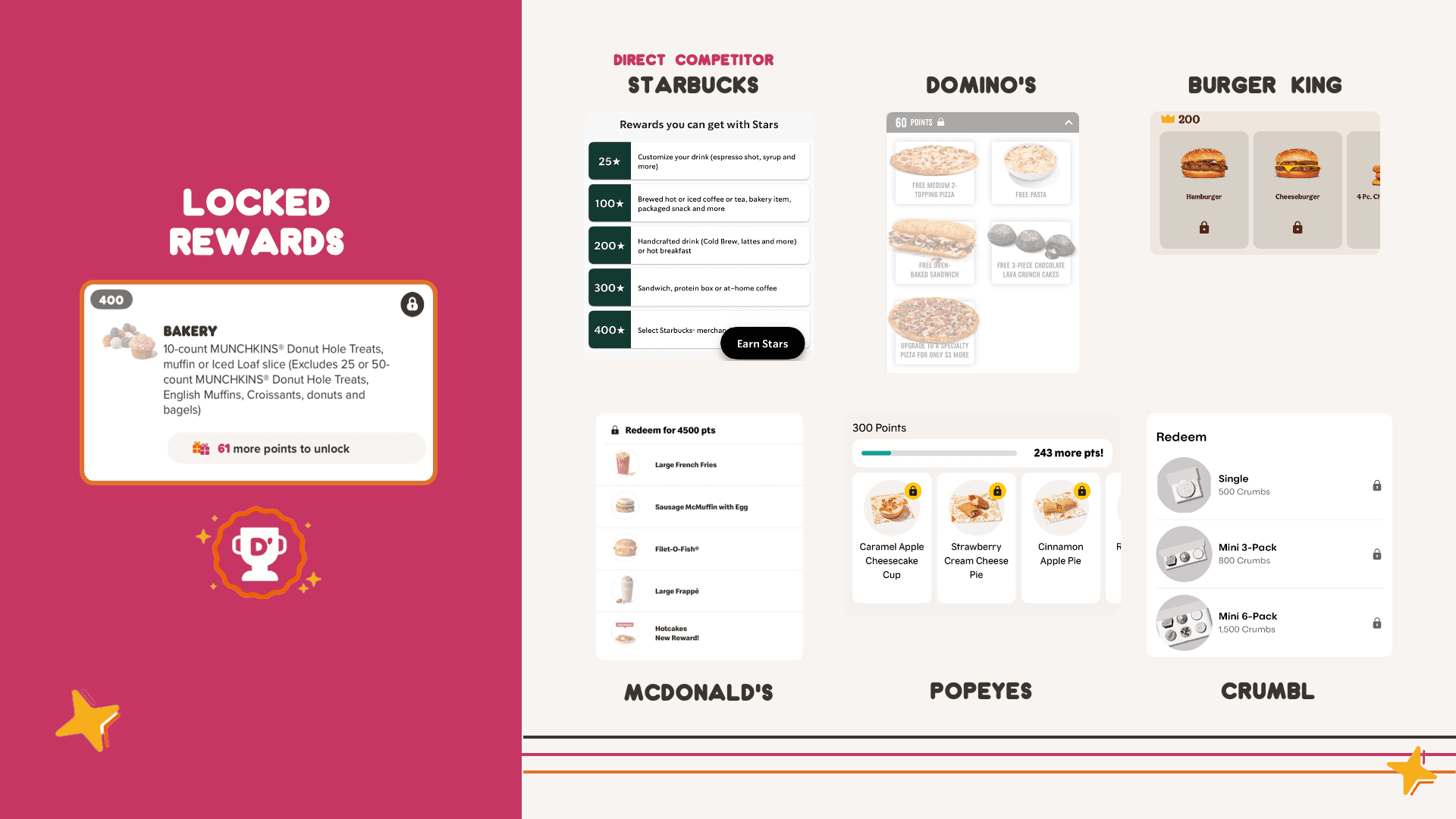
When we expand the comparison to McDonald’s, Popeyes, and Crumbl, the pattern becomes even clearer.
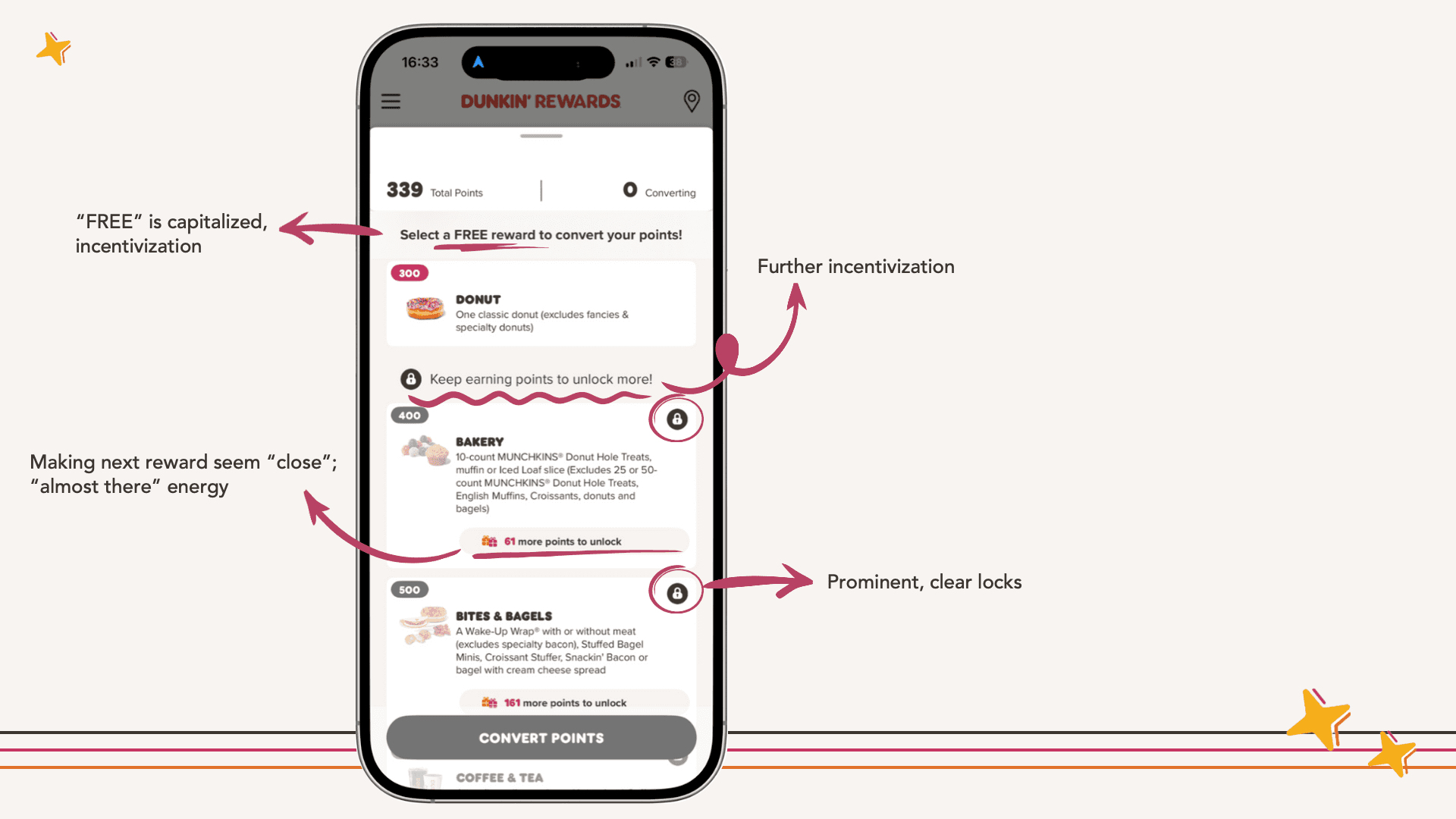
Locked rewards are extremely common across fast-food apps. This shows that Dunkin’s approach isn’t unique, but part of a broader industry standard where rewards are used to encourage habitual spending.
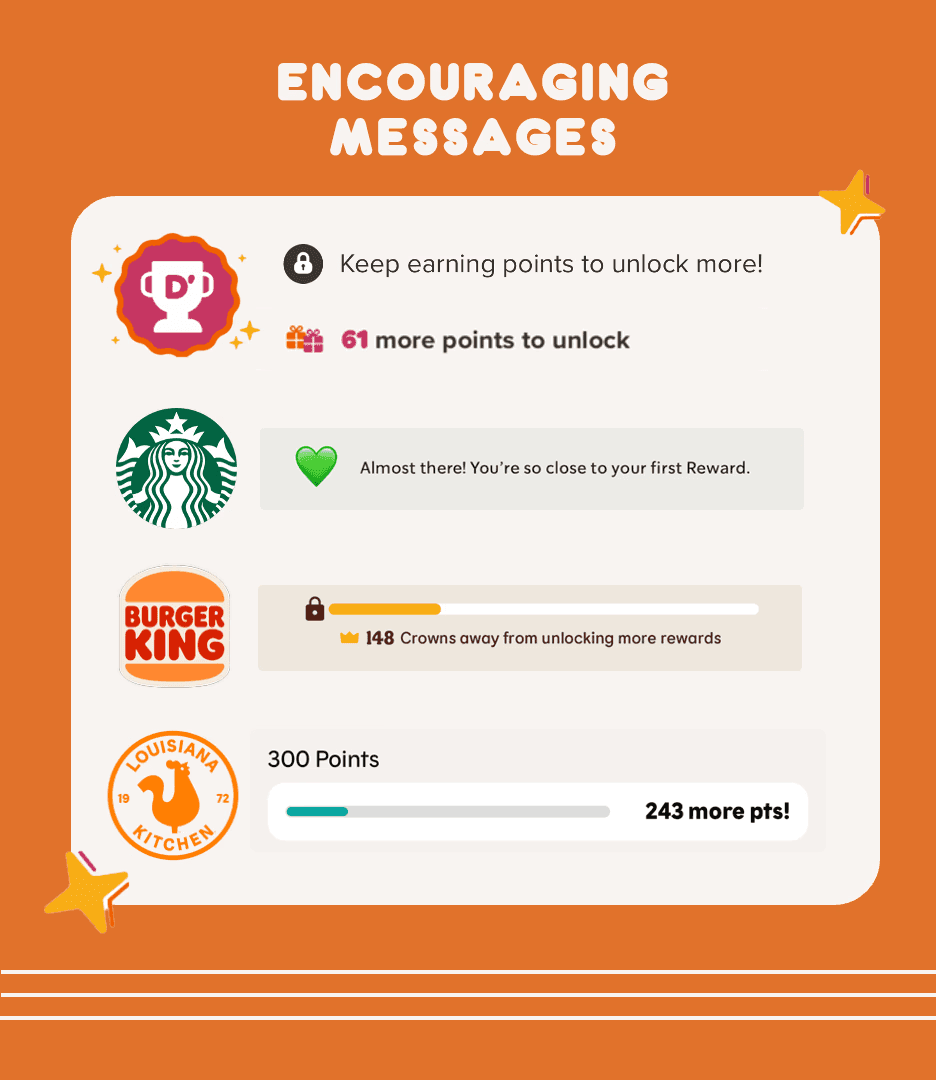
Many of these apps also rely heavily on encouraging language, like telling users how close they are to a reward.For example, Starbucks says “Almost there! You’re so close…etc.”
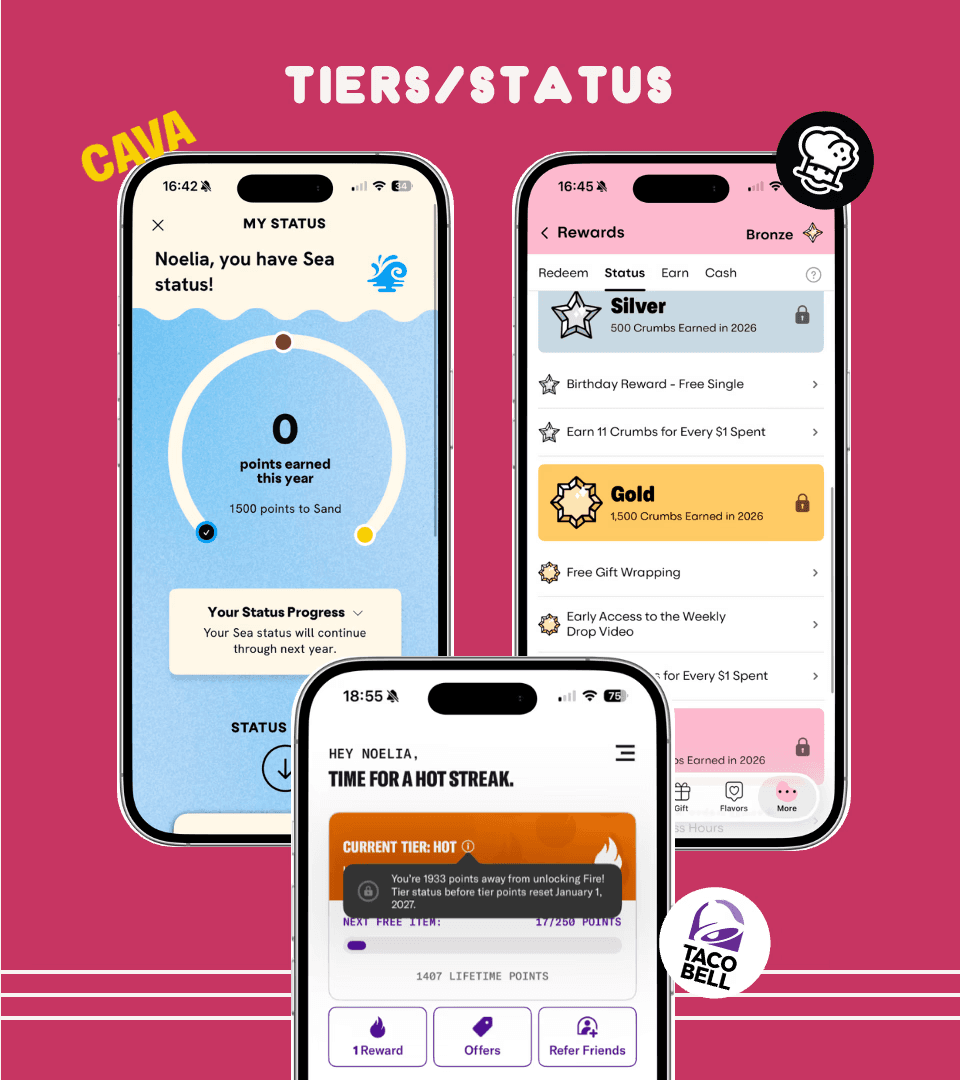
Some apps go a step further by introducing tiered systems, like silver or gold status, where higher tiers unlock better perks. Here I’m showing the example of Cava, Crumbl, and Taco Bell, who all use tier systems within their reward programs.
These tiers create a sense of exclusivity and achievement, which can further motivate users to spend more to maintain or reach a higher status.
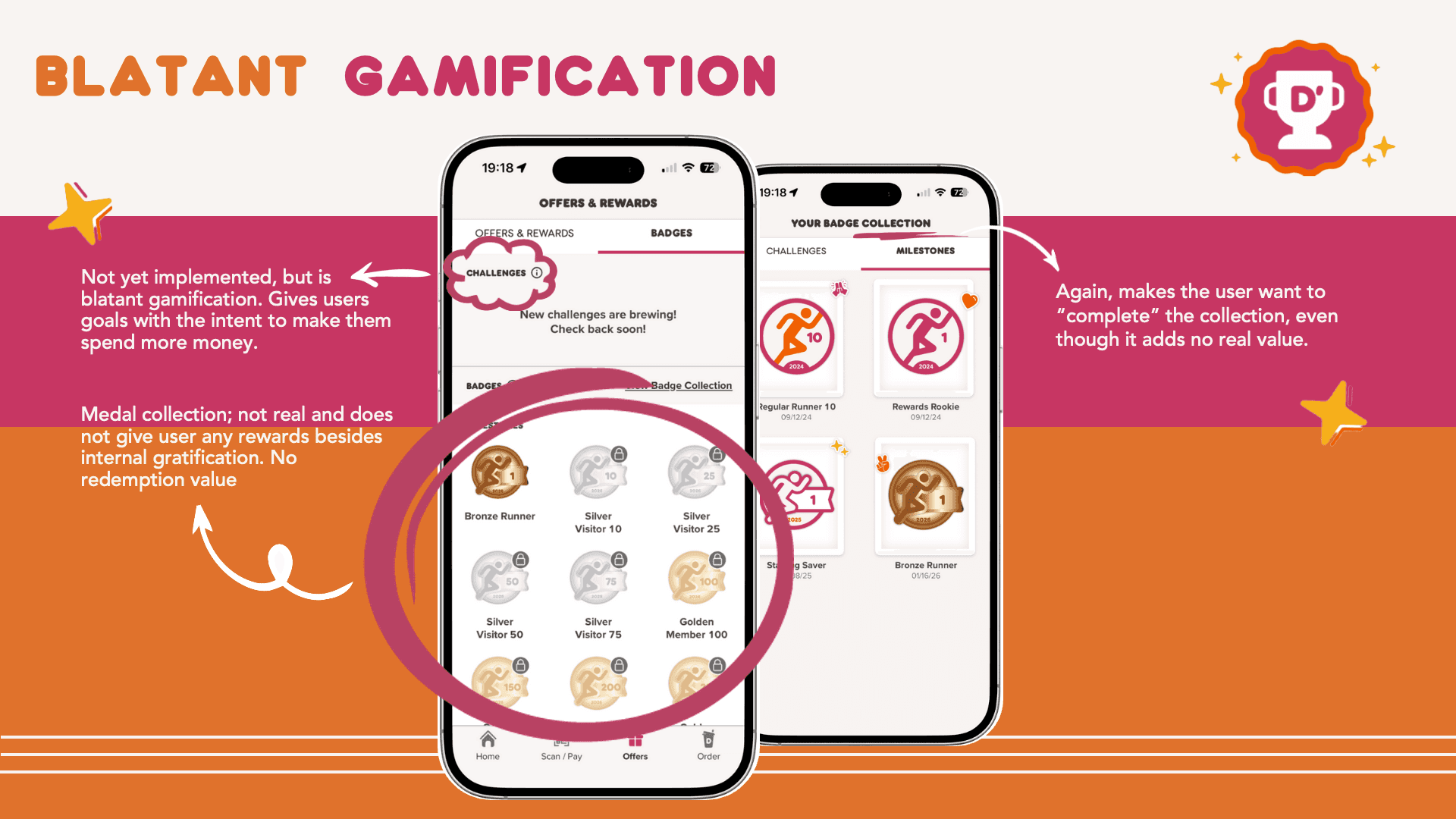
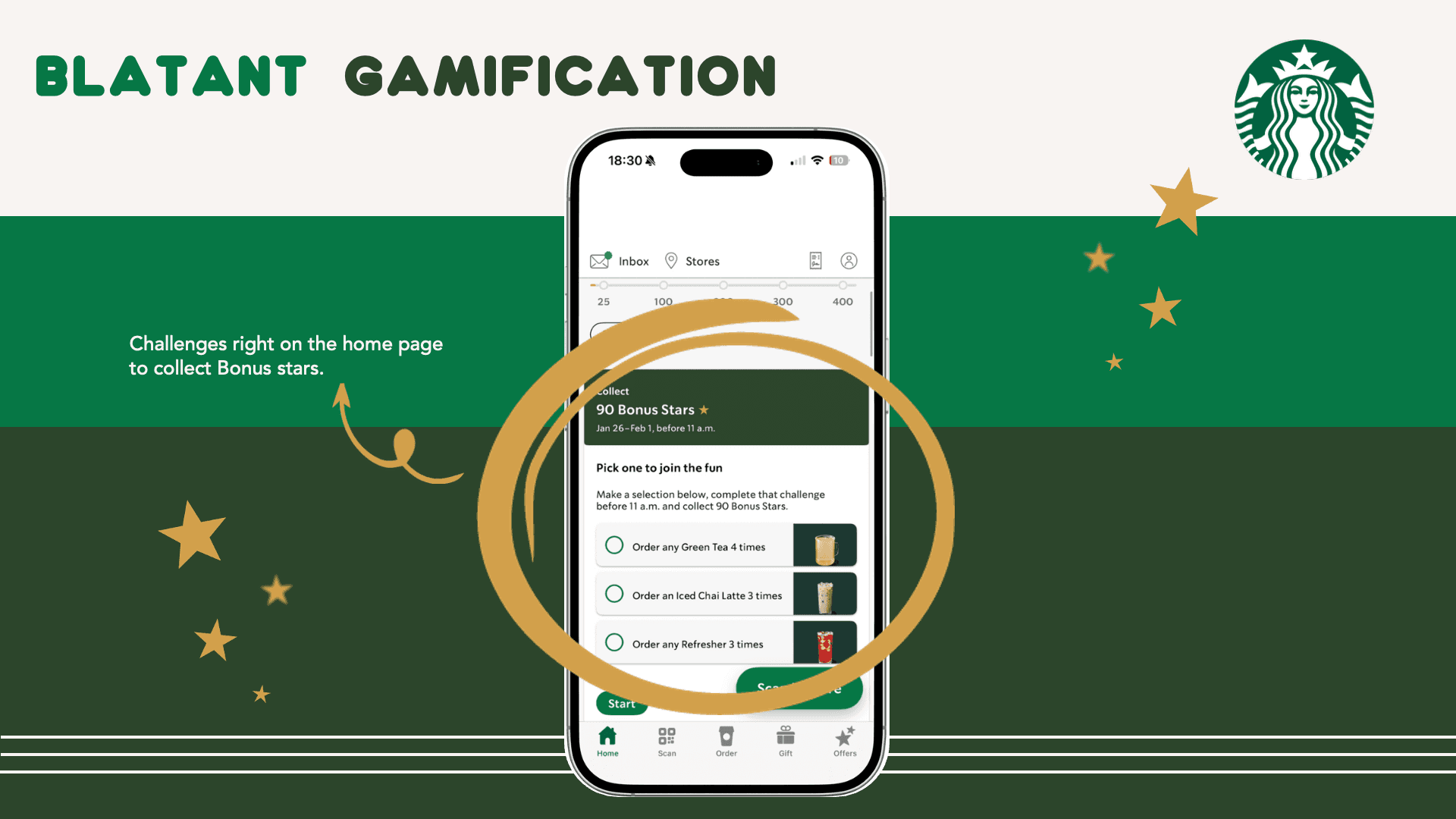
We can actually see this on the Starbucks app, too. I believe this is a relatively new feature, but now, on the very first page, you can see a “checklist” of challenges users can complete in order to earn bonus stars. Now in this case, unlike with Dunkin, starts can actually be redeemed for discounts. However, this is still an example of gamification, where users are incentivized to spend money in order to complete challenges.
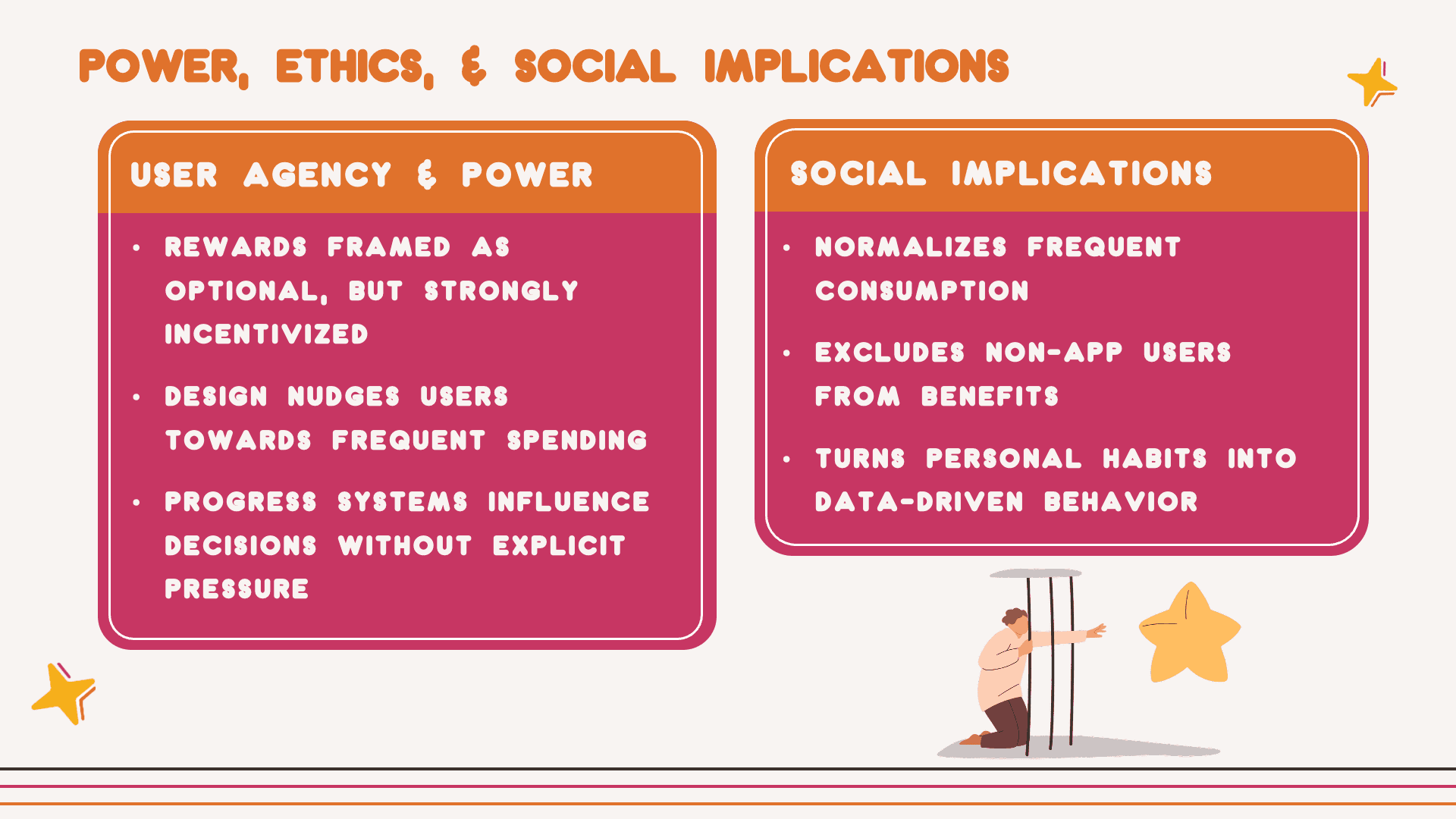
On the surface, the rewards system feels optional and even empowering. You’re not forced to use it, and it’s framed as a way to save money or get free items.
But the design strongly nudges users toward participation. The rewards are always visible, progress is constantly tracked, and locked rewards remind users of what they’re missing.
Agency isn’t removed, but it is shaped. Users start adapting their behavior to optimize the system — spending a little more, visiting more often, or choosing Dunkin over alternatives to reach the next checkpoint.
There are also broader social implications.
App-based rewards normalize frequent consumption and make it feel routine or even necessary. They also create a divide between users who participate digitally and those who don’t. If you don’t use the app, you miss out on benefits that are increasingly treated as standard.What looks like a simple rewards feature is actually part of a larger system that structures behavior, access, and data collection.
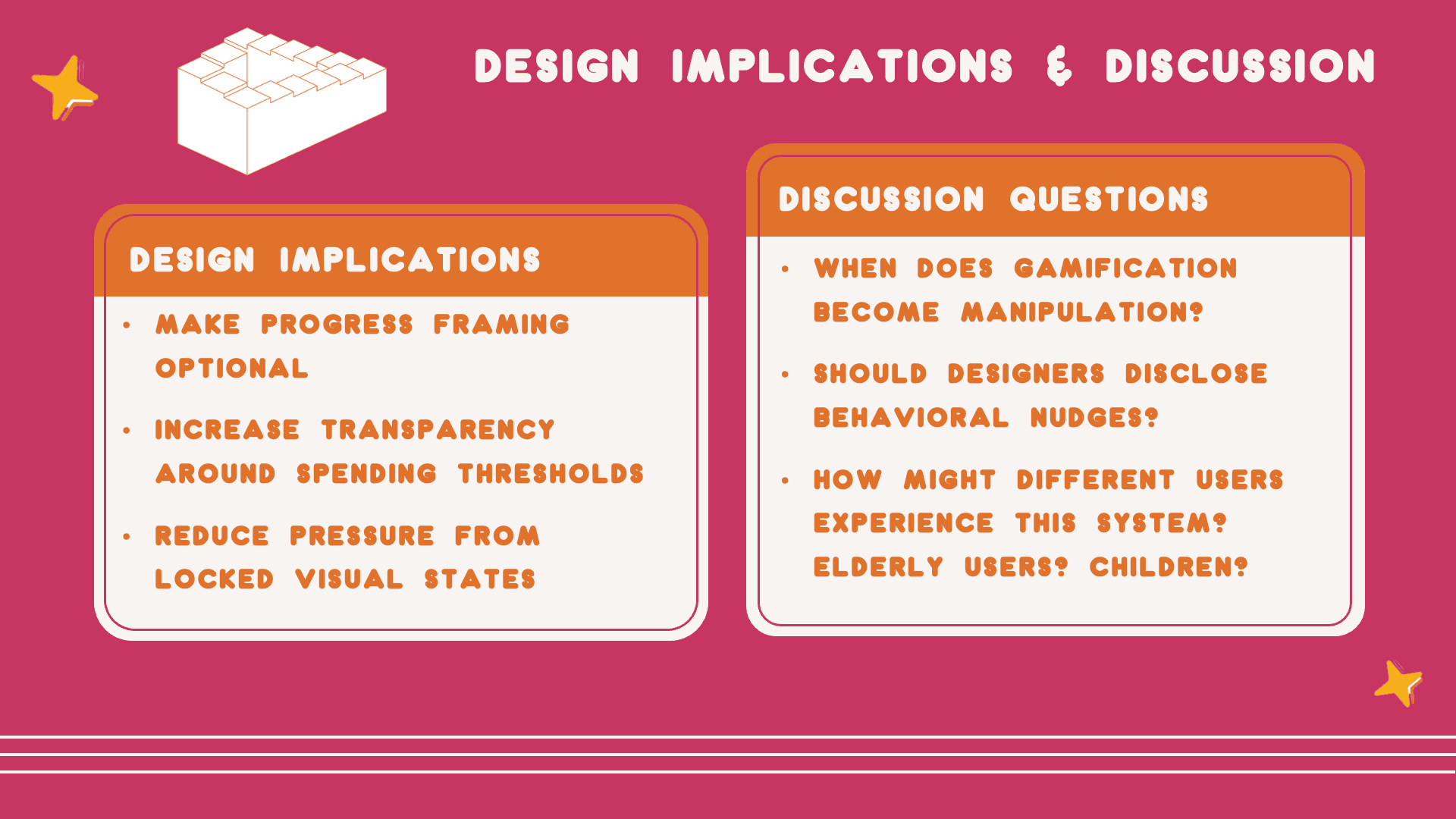
These aren’t critiques of Dunkin as a company, but reflections on the design choices behind the system. Small changes — like making progress tracking optional, being more transparent about how much users actually need to spend, or reducing the visual pressure of locked rewards — could significantly change how users experience the app.
How do we decide where the line is between good engagement design and manipulation? And how might different users experience this system in very different ways?